
You may have heard the term value-based selling but may not fully understand what it means or what it entails. Value-based selling in financial services is an approach that places clients and their financial concerns and challenges at the forefront. It does not focus on communicating what you do, but rather the value of what you do.
Value selling in financial services is a powerful differentiator because, when done well, financial services salespeople help customers navigate some of their most important life decisions, such as buying a home or investing for retirement.
Value-based selling is client-centered. Once you become masterful in this approach, you will know who to help and how your guidance will benefit them. Value-based selling also provides insight into why prospects and clients want and need your products, services, and advice.
Value-Based Selling Is Rooted in Motivation
In your role as a financial services salesperson, your customer often needs to make a change, and change is difficult. Statistics around diet and exercise are proof of that. Unfortunately, many things people are supposed to do simply do not happen.
Value selling in financial services is no different. Change is not easy for those you meet and advise. The equation for change has two forces working against each other: escaping how things are now and resisting change itself. Value-based selling requires motivating your client to change, and in some cases, motivating yourself to change your approach as well.
The Importance of Value-Based Selling
Inevitably, customers will have reservations about a product or service. That is why an effective value-based selling approach first centers on the client and their needs, while secondarily demonstrating your company’s value and guiding them through the sales process.
The measure of value you provide depends entirely on the client. You can offer the same solution to two different people and receive two very different reactions.
For example, imagine discussing an inheritance a prospect has recently received. They may or may not share everything you need to know to advise them properly. Through strong questioning and listening skills, you must uncover what matters most to them. It could be rate of return, safety, or liquidity. You should also understand how this asset fits into their broader financial picture.
Once you identify their needs and goals, you can make a value-based recommendation. Too often, salespeople begin the conversation by discussing their solutions. A value-based seller starts with the prospect, asks thoughtful questions, uncovers priorities, and then makes a recommendation. Helping the client understand the benefits of working with you and your firm comes last.
When you help customers clearly see the best solution for their situation, you earn the business nine times out of ten.
Value-based selling is the proven path to becoming a trusted advisor. Your greatest value is often revealed through the depth and quality of the questions you ask. Strong value-based sellers remain curious and strive to add value in every interaction, whether through insight, resources, stories, or even appropriate humor.
Tips for Practicing Value-Based Selling
Giving Instead of Selling
The most important principle of value-based selling is focusing on giving to clients, not selling to them. The book Go-Givers Sell More reinforces this mindset. Unlike other methodologies, value-based selling focuses on what the client wants and how you can help them achieve their goals.
Value-based selling in financial services is a relationship-building process that is often personal. A key part of your value is the process you guide clients through as you provide advice and solutions.
Giving a Listening Ear
You may have experienced someone asking you a question and interrupting before you finish answering. It does not feel good. Unfortunately, financial services salespeople are often guilty of this behavior.
You might ask a client what they plan to use funds for and then immediately jump to a product recommendation without further exploration. Using a value-based selling approach means diving deeper into discovery, asking better questions, and truly listening.
Skilled salespeople know that trust is built through listening. Challenge yourself to ask as many questions as possible before proposing a solution. This skill improves with practice.
Spend Time Getting to Know Your Client
Every client is different. The early stages of the relationship should be focused on learning as much as possible about them. Understanding how similar clients have been helped and sharing relevant examples builds credibility.
Your products may be available elsewhere, but your experience uncovering issues and solving similar challenges is what highlights your value.
Follow Through with a Consistent Process
Value selling in financial services is not easy. Becoming proficient requires consistent focus, effort, and discipline. Through thousands of evaluations, we know that elite salespeople follow a consistent sales process because it works.
Strong value-based sellers care just as much about the benefits their clients receive as they do about the sale itself.
A value-based selling strategy is essential to improving your sales plan and results. This approach positions you as a trusted business advisor and helps build strong, long-term client relationships.
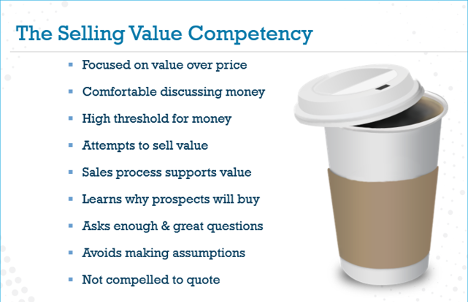
Below are the value-based selling competencies identified by our partner, Objective Management Group, the number one sales evaluation and assessment tool in the industry.
Find Out if Your Salespeople Can Sell Value with a Free Evaluation!