
It is a given that effective sales management habits require contributions on many levels: skill, time, effort, execution, and systems and processes to support coaching, performance management, and recruiting.
What Makes a Successful Salesperson?
Let’s start by evaluating what makes a successful salesperson. We recently asked the participants of a workshop to identify and share the habits they believed contributed to the success of their best salespeople. Below are some of the common habits identified:
- Develops great relationships
- Networks regularly
- Practices good time management
- Gets to decision makers
- Is selective in prospecting
- Provides exceptional customer service
Then we asked them to talk about the flip side of the list—those habits that inhibited or hurt a salesperson’s ability to close more business. Below are some of the habits they identified:
- Sells on price
- Inconsistent prospecting
- Procrastinates
- Presents to the wrong people
- Does not fully qualify prospects
- Poor prioritization
- Is too comfortable
These desired sales behaviors provide insights into which habits are most important for sales leadership in developing and motivating salespeople.
The Role of Sales Management Habits in Leadership
We partner with and utilize the most recognized sales evaluation in the industry by Objective Management Group. To avoid guessing about what contributes to effective sales management habits, here are the core competencies taken from their sales management evaluation below. Take a moment to review the list and reflect on how effective you are in these areas.
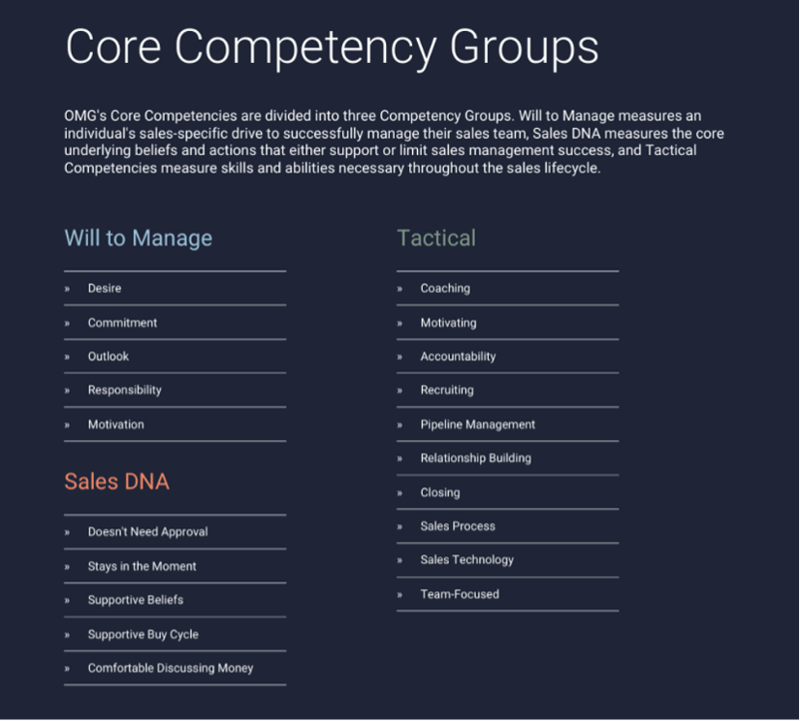
This comprehensive list of competencies has layers of effective sales management habits beneath it. Let’s focus solely on the skills of a great coach—one of the most critical roles of an effective sales leader—as managers should be spending at least 50% of their time coaching.
Coaching Habits That Drive Sales Growth
Here is a list of skills and habits necessary for successful sales coaching:
- Consistently coaches
- Has a passion for coaching
- Debriefs sales calls effectively
- Stays in the moment
- Asks enough quality questions
- Does not need approval from salespeople
- Handles joint calls effectively
- Does not rescue salespeople
- Implements and coaches the execution of a consistent sales process
- Is effective at getting commitments
- Coaches to improve skill and change behavior
- Knows how and why people buy
It’s not enough to just have the skill. For managers to be successful at building a sales team for growth, they must be in the habit of using those skills. One of the most important sales management habits is scheduling coaching time on the calendar with a focus on improving skills, not just coaching a deal at hand.
Building Extraordinary Sales Managers
Being an extraordinary sales manager is challenging and time-consuming. It requires attention to detail, the ability to have tough conversations with those who are not meeting their numbers, the desire and commitment to grow yourself and your salespeople, consistent activity, and patience.
The rewards: like the coach of a winning team or conductor of an extraordinary symphony, you have the ability to positively affect the success and lives of your salespeople and company by cultivating effective sales management habits.

Frequently Asked Questions About Sales Management Habits
1. What are sales management habits?
Sales management habits are the consistent behaviors, routines, and practices that sales leaders use to coach, manage, and develop their teams. These habits shape performance, accountability, and long-term sales growth.
2. Why are sales management habits important?
Strong sales management habits create structure, improve coaching effectiveness, and ensure that sales teams are consistently meeting and exceeding goals. Without these habits, performance often becomes inconsistent and results unpredictable.
3. What are examples of effective sales management habits?
Examples include regularly coaching salespeople, setting clear expectations, holding team members accountable, tracking performance metrics, and investing time in skill development.
4. How can I improve my sales management habits?
Start by scheduling consistent coaching sessions, reviewing sales activities instead of only results, and developing systems that support recruiting, performance management, and accountability.
5. How much time should managers spend coaching as part of sales management habits?
Industry best practices suggest that managers should spend at least 50% of their time coaching. This habit ensures skill development, behavior change, and stronger sales outcomes.