ACTG Sales Management Blog

Sales & Sales Management Expertise Blog  

Tony Cole

Recent Posts

Recruiting Better Salespeople: The Make-Up of Hall of Famers

Posted by Tony Cole on Fri, Jan 26, 2018

Assuming for a second that when you think about hiring for a position in your organization, you are thinking about hiring the best- especially in the early rounds of looking for talent. No one reasonably goes about writing a job description like this: 

"ABLE Sales Company is looking for the most unbelievably average salespeople we can find. We already have enough top producers and those that are failing. What we really need are some people to bump up the middle of our bell curve. If interested show up and you’ll get a job.”

No, you are not looking for average- you are looking for people who can get your organization to the next level. You’re looking for the best of the best.

Which leads me to today’s story: I was listening to ESPN radio and tuned into The Golic and Wingo Show. They were sharing stories about the Baseball Hall of Fame inductees that a reporter (I didn’t catch the name but it might have been Tim Kurkjian) had heard from each during his time as a sports reporter. I would like to share 3 of those stories with you today and how they are great analogies for recruiting the best of the best.

2018 hall of famers

(Image from Getty Images)

Vladimir Guerrero: Vladimir is a Dominican born in 1975. He arrived to his first professional baseball try-out on a bicycle. He was wearing baseball shoes that didn’t match and one was so big he had to stuff it with socks so that it wouldn’t slip off. He was on the field for 5 minutes hitting, throwing and catching when the scouts told him he was finished. They signed him to a contract and now he’s in the Baseball Hall of Fame. So, how does this relate to recruiting talent?

  • When you got it, you got it
  • Don’t judge a book by it’s cover

Trevor Hoffman: Trevor was born in Bellflower, California in 1967. When he tried out to play professional baseball, he did so as a shortstop. However, after a few minutes of taking the infield, somebody told him he was terrible as a fielding shortstop and he was a weak hitter. They said if he was going to make it in the pros he might want to try pitching. He did and now he’s a Hall of Famer. What’s the hiring lesson here?

  • When interviewing people don’t be afraid to push a button that might upset them. It’s going to happen in their sales career anyway so you might as well find out how they are going to react. Will they absorb the challenge or get emotional?
  • Every candidate you interview and eventually hire is going to come with some warts. What you want to know is – are they coachable?

Chipper Jones: Chipper was born in 1972 in Deland, Florida and played his entire career with the Atlanta Braves. Chipper was the #1 MLB draft pick in 1990. As the story goes, the Braves were ready to make him an offer but his dad was encouraging Chipper to hold off because he could probably get more money from another team. Chipper told his dad that he wanted to be the #1 draft pick and that the money didn’t matter. He knew that he was going to be successful and that he would earn his ‘big’ money based on his performance rather than what another club thought he was worth today. Again, why is this important when hiring salespeople?

  • You have to be patient. Just because it’s hard to find the right person, doesn’t mean you should hire one that is close. Close enough isn’t good enough (you already have some of those on your team and you don't need more).
  • Hire people that are willing to bet on themselves. Often recruiting managers, HR, and recruiters shy away from those that don’t exactly fit the pedigree. When interviewing and working the compensation into the hiring contract, be bold enough to challenge the candidate to put some money at risk. If they are as good as they think they are they will make up for it in spades in the long run.

There is nothing easy about hiring. If you listen to the stories of these recent inductees you will find that there was nothing easy about getting into the Hall of Fame. Congratulations to the 2018 MLB Baseball Hall of Fame Inductees: 

Chipper Jones

Vladimir Guerrero

Jim Thome

Trevor Hoffman

Jack Morris

Alan Trammell

Need more help hiring the best of the best? Download our free Recruiting Success Formula document and Interview Questions guide to improve your recruiting process, today!

Click HERE to read newsletter

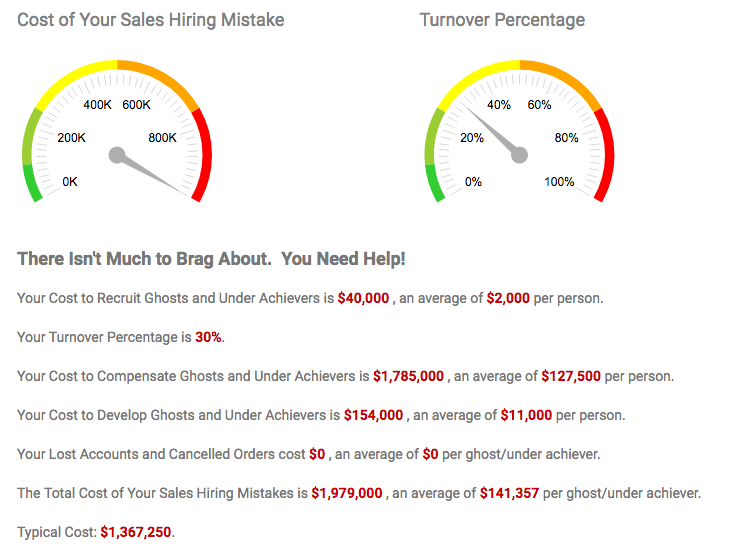
Also, click here to complete the Objective Management Group Hiring Mistake Calculator

Topics: hire better salespeople, building effective sales teams, recruiting sales talent

Do You Have Sales Growth Problems? Solution #4: Create a Selection Criteria Checklist

Posted by Tony Cole on Fri, Jan 19, 2018

Whitey Kollmeier, my friend and greatest center of influence, told me a story about Coach Scolinos. In January of 1996 he was a speaker at the American Baseball Coaches Association. His topic: Stay at 17 Inches. He approached the stage with a home plate hanging from his neck. The short version of his message was this:

  • What do you do with a pitcher that can’t throw the ball over the plate?
  • What do you do with your best athlete that breaks the rules (outside the plate)?
  • What is happening inside our schools, businesses, and government institutions when people are breaking the rules (widening the plate)?

This message alone is powerful and one that you should read, digest and think about as you build and lead your company, sales team, family, or community organization. I’m taking the concept of ‘staying at 17 inches’ and applying it to your sales process to help you and your company achieve your sales growth objective by closing more business, more quickly and at higher margins. Sound good?  If you respond with a yes then I’ve thrown a strike!  Hitting it is up to you. 

Solution #4: create a “strike zone” to help you select the right prospects to target and attract to your business

The “strike zone” is a list of criteria you establish to identify what type of prospect is right down the middle, a little inside and a little outside of your core target market profile. The criteria for the type of business you want might look something like this: 

homeplate graphic.png

In addition to that checklist, you also need a process to determine if the potential prospect qualifies to do business with you within your framework of how you do business. For example, asking yourself questions like:

  • Is the decision maker involved and invested in the process?
  • Are they willing to provide all needed information in a timely fashion?
  • Have they agreed to make a decision in timely manner?

With this approach – staying within your ‘home plate’ you can now:

  • Focus your attention more specifically on the needs/problems/challenges of your target market and build your lead generation efforts to attract the right prospects
  • Build a reputation as the ‘go to’ source for your services within your target market
  • Build better solutions and relationships with partner providers as well as make better decisions on what opportunities to work

Also as a producer/manager, you must pay close attention to what is actually going into the pipeline and be courageous enough to not swing at those pitches that are low, inside, high or outside. This is where your CRM system comes into play. Not only should your CRM system have your mapped sales process but beneath each step in your sales process there should be further qualifying points that need to be checked or clicked. Here is an example for ABC Company.

Step 1: Qualified Appointment – Prospect has a compelling issue to address or an opportunity to leverage:

  • Met with decision maker and they have a significant risk management problem
  • Company fits our profile for sales revenue and potential revenue
  • We will have access to all information in a timely basis
  • Prospect has acknowledged a ‘have to fix’ problem

Step 2: Qualified Prospect- Prospect has determined capacity to invest time, money and resources to ‘fix’ the have to fix problem

  • Have discussed and monetized the existing or potential problem
  • Prospect has confirmed that price is important but solving compelling issues within a monetary range is more critical
  • Prospect has agreed that a change in current relationship will happen providing we can solve the problem per specs within budget

These are just two examples of how your CRM process has to support staying within the strike zone. If you, as a producer, or your salespeople cannot ‘check the boxes’ then this begins to help you see the pitch more clearly and identify if this prospect is ‘over the plate’.

For more information on Selection Criteria or other services that can help close your sales growth gap, go to our website and download our e-book "Why is Selling So #%&@ Hard".

Click HERE to read newsletter

Do You Have Sales Growth Problems?  Solution #3: Do Something with Your Pipeline

Posted by Tony Cole on Fri, Jan 05, 2018

Of course you have sales problems. If it’s not a production problem, it’s a productivity problem. If it’s not a productivity problem, it’s a servicing problem. If It’s not a service problem, it’s a sales/sales support turnover problem. In the words of Rosanne Rosannadana,“It’s  Always Something”

Most companies, if not all companies have some method for keeping and tracking sales pipeline activity and progress. We use Hubspot’s CRM because it ties very well with our inbound lead efforts, the pricing is extraordinary, the reporting is as good as anything on the market and getting up to speed is fast and easy. But putting data in the CRM and keeping an eye on it is not enough. You have to gain business intelligence and then act on what you know.

Conduct an Emergency Pipeline Anaylsis (EPA) for a simple but effective way to determine what stays in the pipeline and what goes to the pipedream (delete folder). EPA originator, Dave Kurlan, wrote a blog that goes into detail about the 16,000+ proposals presented to unqualified buyers by B2B salespeople every day. This data comes from the 1,000s of Sale Evaluations and Improvement Analysis (SEIA) done yearly by our firm and others around the world. In the SEIA we analyze the state of the current pipeline. Figure 1 identifies the quality of the pipeline assessed for a large sales organization. When assessing for closable opportunities the green area at the bottom should be much larger than the blue area at the top if the opportunities are truly qualified. If your closable opportunities are not really qualified you end up with a similar pipeline configuration to the one you see in the chart.

inverted pipelien.jpgFigure 1

The process to get this information is simple but effective: Create a number of qualifying questions that are based on the steps in your qualification checklist. Those questions may include but are not limited to:

  • Is there severe mental anguish to make a purchase/change and is it personal?
  • Did I attach value or monetize the problem or failure to leverage the opportunity?
  • Did I eliminate the incumbent?
  • Did I ask, “Is this a have to fix or want to fix problem” and did the prospect say ‘have to fix’?
  • Did they agree to invest the appropriate amount of time, money and resources?
  • Due I have a date of execution, purchase, contract?
  • I have met with the decision makers (not I will be meeting with decision makers at time of presentation) and they have agreed to make a decision when I finish my presentation.
  • I rehearsed the prospect on what they will do when the incumbent returns to beg for the business, fix the problems and match our fees, structure, contract.

Answering/scoring these questions simply requires a 1 or a 0. You add up the scores vertically for the opportunities in your pipeline and then make a decision to either;

  1. Call your prospect and deal with the open items
  2. Reconcile that you have asked these questions and didn’t get the right answers and therefore make the ‘go, no-go’ decision to present.

There is a world of difference between managing the pipeline and looking at the pipeline and reporting the results. Managing is an active process. As a manager you must constantly and consistently evaluate the opportunities in the pipeline for:

  • Quality – are they true opportunities
  • Quantity – the number and value volume must match each individuals success formula
  • Movement – based on your buyers’ buying cycle you should be able to predict movement from one step in the process to the next
  • Measure the conversion ratios from one step to the next to evaluate effectiveness of the sales person’s execution of the process
  • Evaluate for credibility and validity
    • Credibility – did the projected close volume actually close
    • Validity – did the accounts in the pipeline actually close and account for the volume forecast and actual sales

This will take time but it’s important for you and your salespeople to do because it will ultimately result in closing more business, more quickly at higher margins.

CALL TO ACTION

Set up a 1-on-1 coaching call with one of our Sales Development Experts to discuss how to effectively build and manage a credible and valid pipeline report, regardless of the CRM you are using.

EMAIL: traci@anthonycoletraining.com

Subject line: 1-on-1 coaching call

Topics: Pipeline management, coaching salespeople, qualified leads

Trouble Growing Sales? Solution #2: No More Bad Prospects

Posted by Tony Cole on Wed, Dec 27, 2017

I’ve been working on growing sales for over 30 years. First with Nautilus Exercise Equipment, then in the insurance business and for the last 23 years with Anthony Cole Training Group. It’s been at least 25 years since I heard David Sandler, on a cassette tape, say; “there’s no such thing as bad prospects, just bad salespeople.” Not bad as in character, morals or integrity- just bad a selling.

But as I read Dave Kurlan’s blog this morning about choosing between bad salespeople and bad sales management it got me thinking about what Sandler said those many years ago and what we continue to hear from salespeople today when discussing opportunities won and lost. Let’s take a look at what’s happening or not happening. 

List of reasons for not getting the sale:

  • They had a long-term relationship/incumbent matched our proposal
  • The decision maker wasn’t involved 
  • Out pricing wasn’t competitive/ we didn’t have the right products
  • The timing wasn’t right

There are many, but in a nutshell the overall question to a salesperson would be; “When you asked them about, discussed, made sure that...(fill in the blank with any of the reasons listed above) What did they say?  What was their reaction?”  

As you read this as a sales person you might be thinking one of a few things: 

  1. I’m not asking those questions 
  2. Those are good questions to ask
  3. I should be asking those questions 
  4. I would never ask those questions 

If you are thinking #4, then your reasons for not getting the business are never going to change! That is what Sandler and Kurlan are talking about when they discuss bad salespeople. You cannot blame the prospect for having objections to buy. Heck you have your own set of objections/reasons every time you decide not to buy or change. 

But what about the sales manager? Where does that person fit into the equation? Simple: at the beginning, middle and end of every sales opportunity, sales meeting and coaching session. 

6698425_xxl meeting debrief people.jpg

Solution #2: Pre and Post Call Sessions and 1-on-1 Coaching

Pre-call coaching sample questions:

  • What buying process questions will you ask? (These are questions about compelling issues, stage in the buyer’s journey, options they are exploring, others solution providers they are exploring and solution selection criteria.) 
  • What answers do you anticipate?
  • How will you handle those answers?
  • What questions are you anticipating?
  • What will your response be?
  • What objections, delays or stalls should you anticipate?
  • What is your response?

Unfortunately, what we do know from the 1,000s of sales managers assessed for coaching skills is that less than 10% of them have adequate skills to be effective at developing sales people. 

What does this all mean?

  1. To eliminate bad prospects - which really don’t exist - eliminate bad salespeople. 
  2. To eliminate bad salespeople- eliminate bad sales management/ lack of sales coaching
  3. To eliminate bad sales management- hire people that have the skills to be effective in the role 
  4. Don’t use sales management as the next step in the career path for successful salespeople
  5. Provide the training, development and coaching your managers need to be effective

Need further assistance with the post-call session? Click HERE or the button below to view our Post-Call Debrief Analysis Worksheet.

Post-Call Debrief Worksheet

Topics: coaching salespeople, effective sales management

Do You Have Sales Growth Problems?  Solution #1: Coach the team you have.

Posted by Tony Cole on Fri, Dec 01, 2017

In a remarkable show of grit, the University of Alabama clawed back from a 20-point deficit against the University of Minnesota, though they eventually lost by 5. Most of you are probably thinking 1 of 2 things:

  1. I don’t care about Alabama basketball – that's just something that happens between football season and spring football practice.
  2. They still lost so why is this relevant?

It’s relevant because of a detail you wouldn’t know about unless you watch college basketball or follow sports shows regularly. For those totally out of the loop, in basketball each team has on the court at any one time 5 players. Due to an injury, a player fouling out and several players being ejected from the game Alabama played the last 10+ minutes of the game with just three players on the court!

Avery Johnson, the head basketball coach for Alabama, was asked to explain how he believed his three guys managed to pull off the most amazing loss in NCAA history. His response was that they practice a lot of defensive 5 on 3 basketball. There is no reason to go into the details of that here other than these two important things:

  1. Understanding the situations you know you are going to be in at some point during the game is imperative.
  2. Coaching your players on how to react and what to do in those situations is crucial for your success.

How is that any different than sales? The short answer is that it is not. So why doesn’t it – coaching the team that you have - happen?

  • Hiring managers believe they are hiring people with the appropriate skills and know how.
  • Most managers don’t believe that their salespeople need practice of basic fundamental sales skills – if they did, more sales training and 1-on-1 coaching would be taking place and more people on the sales team would be hitting their goals.
  • More time is spent on crafting the ‘deal’ then on practicing what to do when:
    1. The decision maker doesn't’ show up for the presentation
    2. The company hasn’t committed to leaving their current supplier, relationship, banker, insurance broker
    3. The prospect wants you to ‘sharpen your pencil’
    4. The prospect wants to ‘think it over’
  • Most sales managers – yes this might include you – haven’t been trained on effective coaching, don’t schedule time for coaching opportunities, don’t demand role-playing in sales meetings and confuse performance management with coaching.

Our assessment and research of dozens of companies with dozens of sales managers tell us that less than 10% of sales managers have the appropriate coaching skill set.  As you can see from this Sales Effectiveness and Improvement Analysis snapshot of this sales organization the sales managers who are employed there have 44% of the required skills and are 59% effective when coaching. 

OMG.png

In addition to effective coaching (Download Keys to Effective Coaching E-book) a Sales Managed Environment requires performance management, effective recruiting, motivation that works and upgrading the sales team.

Here are a couple of ideas worthy of consideration and implementation:

  1. Carve out time and be a slave to your schedule for 1 on 1 coaching to specifically improve skills and change behaviors
  2. Make sure that in every sales meeting you have a segment on sales skills improvement that includes drill for skill and role-playing
  3. Every week in your schedule you should have time for the ‘situation room’. This is the opportunity to conduct pre–call strategy sessions and post meeting debriefs
  4. Instruct and demand your sales team schedule joint calls with you once a month. 
  5. Make documentation of ALL activity in your CRM a requirement to get reimbursed for business expenses. 

In a 1,000 word blog we cannot solve all the sales problems outlined in the beginning but tackling coaching is a great start. For another step in that direction take action NOW. For a free sample of the Sales Effectiveness and Improvement Analysis click the botton below.

Free SEIA Sample

Topics: Sales Growth, Sales Manager, coaching salespeople, effective sales management


    textunder

    Subscribe Here


    Most Read


    Follow #ACTG


    About our Blog

    Anthony Cole Training Group has been working with financial firms for close to 30 years helping them become more effective in their markets and closing their sales opportunity gap.  ACTG has mastered the art of using science-based data and finely honed coaching strategies to help build effective sales teams.  Don’t miss our weekly sales management blog insights from our team of expert contributors.


    Recent Blogs