
ACTG Sales Management Blog

Sales & Sales Management Expertise Blog  

Sales and Super Mario

Posted by Alex Cole on Fri, Oct 27, 2017

Last week, my fiancé and I were gifted a new Super Nintendo Classic with all the originals preloaded- Donkey Kong Country, Street Fighter, Zelda and of course, Super Mario World. Now I realize only a certain group reading this will know the exact system I am referring to but my theory still applies to Atari lovers, Gameboy enthusiasts and even those of you who know nothing about gaming and gaming consoles.

The first night we picked up the retro remotes we discovered something—these games are hard! Particularly Super Mario World. Being someone who grew up with this technology, I thought getting back into it would be simple. I was wrong. I was so excited to be playing again I found myself running the course, taking risky jumps, trying to collect all the coins I could and would end up falling to my virtual death or getting hit in the head by a turtle shell. I realized that I had an opportunity to make it through to the next level but I wasn’t doing what was necessary to convert that opportunity into a win. I rushed through. I took risks that weren’t worth it but I made them anyway because it was the only play I had. And then I had an epiphany- the same thing happens in sales.mario2.jpg

One of the problems we hear our clients talk most about is their ability to grow sales and its direct correlation to their salespeople’s ability to create and convert opportunities. Lead generation and conversion requires two things: effort and effective execution. Majority of the time, we find that the effort is there but the execution could use work. If you were to ask your salespeople to show you their pipeline for the next 30 or 60 days, what would it look like? There are probably enough opportunities but are they properly vetted? Does the lead or prospect qualify to do business with your organization? Does your company qualify to do business with them? Or are they just in there to make it look like your sales person has a full dance card for the next month? Weak, unqualified pipelines make cowards of us all- we don’t want to throw the unqualified ones out because if we did, what would we have left?

Salespeople tend to rush through the sales process after hearing the littlest pain indicator or buying signal. They feel the quicker they move, the more likely the prospect is to say “yes” at time of close. However, that’s rarely how it works out. Usually when we rush, we are left with “think it over”, stalls and objections or the prospect decides not to answer calls or emails at all. So, what can your salespeople do TODAY to help fix the problem?

  1. Slow down! Don’t rush the sales process. When we rush, we get inconsistent results and are likely to face more problems on the back end.
  2. Don’t be afraid to ask the difficult questions. The #1 reasons salespeople struggle with creating and converting leads is because they think they need to be liked in order to get the business. This will keep them from asking great, robust questions that allow them to properly qualify for the opportunity. It will also help your salespeople stand apart from their competitors.
  3. Use our free tool “Qualify Your Prospects” to help your salespeople better qualify and then have them remove prospects from their pipeline as soon as they realize there isn’t anywhere to go. They don’t need to continue wasting their time with another “discovery call” or follow-up email. Put them in your tickler system and move on to the next lead.

There are many other techniques to help your salespeople keep from getting hit in the head with “think it over” turtle shells. Sign up for our free live broadcast, “Learn How to Create, Cultivate and Convert Qualified Leads for Great Sales Growth” for more tips and tools! Your salespeople will learn proven methods to find and connect with real buyers in this new world of selling.

Sign up for How to  Create, Cultivate & Convert Sales Leads  Live Broadcast!

Topics: Prospecting, Qualifying leads, coaching salespeople, create & convert leads

How Great Salespeople Continue to Learn and Earn

Posted by Tony Cole on Thu, Oct 12, 2017

When I Googled ‘Keys to Great Sales Success’ here are some of the links I found interesting:

Each of these are good articles with great suggestions and there is nothing written or stated that a reasonable person would argue about.  There is no shortage of information about how to become a great sales person. But if was that easy then why do so many, apparently talented sales professionals seem to stagnate or completely struggle with improvement? With that question in mind I want to share with you what I’ve Learned when it comes to being successful in any profession, not just sales.

Yearning and Learning Leads to Earning.

As a boy watching TV with his dad, I became enamored with football.  At the age of nine, I asked my dad if it would be okay to go out for football.  He said “sure”.  He gave me the phone number for Matt Gazzara – coach for the local Pop Warner football team – The Hammonton Hawks – and told me if I wanted to play I needed to call Coach Gazzara and ask if I could come to a practice.  I called, went to practice and fell in love with the game.  I finished the first practice and announced to my dad that I would one day go to college to play football.

I didn't say I would like to go to college to play football. I said I would go to college to play football.  For the next eight years I did everything I had to do to put myself in a position to accomplish this goal.  My senior year I signed a full scholarship commitment letter to play football at the University of Connecticut.

The unseen aspect of this story is what I had to do in the classroom.  I played ball with other talented, faster, larger football players but they didn’t hit the books the same way, get the same grades to qualify for college.   When college coaches came knocking on Head Football Coach Joe Cacia’s door, not only did I look the part of a college football player on film, but my grades allowed me to qualify for the academics.

What I didn’t think about at the time but now realize, is that the yearning and Learning led to my Earning that scholarship. The Earning didn’t stop there.  I Earned a college degree at little cost to my parents and me.  The yearning earned me an opportunity to work as a coach at UConn, at the University of Cincinnati and at Iowa State University.  This Yearning Earned me the opportunity to meet Ralph Grieser who helped me land a great job with Nautilus Exercise Equipment that paid me my first real income of $47,000 as a sales person.  This was good money in 1983.

This story goes on but I want to cut the story short so I don’t lose you.  The shortened version is this:  I went into the insurance business in 1987 after relocating. I didn’t know anyone and selling insurance is all about who you know.  I Yearned to have a better life for my family and so I hired a coach and paid him with a credit card because I didn’t have the cash and didn’t want my wife to worry.  That decision – to Learn more about the art and science of sales - lead to Anthony Cole Training Group and where I am today.

Book Your Complimentary Coaching Call

Linda and I own Anthony Cole Training Group. We employ eight people and we serve clients across the country.  Over our 25 - year history we’ve developed long- lasting relationships with our clients, product providers and business advisors.  Our family has been well taken care of.  We contribute to our community. We love the people we work with and the clients we serve.

So how about you and your team? Do you and your people continue to Yearn, Learn and Grow? If so, what do they have in common?  What is it that they Yearn for that keeps the fire burning and drives them to do the right things more consistently then those who don’t?

Think about your best people and their willingness and ability to Learn and adapt to ever changing circumstances.  You will probably find that they don’t make excuses. My guess is that they take the time to Learn and assimilate new information, adopt new thinking and strategies and implement tools and systems to keep themselves in-the-game and top of your stack-ranking reports.

And what about their Earnings?  Not just the money but also the client relationships they’ve Earned and retained over the years; The respect they have in your company and in the industry; the satisfaction of knowing they’ve done a good job; the recognition of their peers as leaders and top performers.

Finally think about the talent you have and the gap between those who are succeeding and those who are not performing at the level you anticipated when you hired them. What is missing? The Yearning or the Learning? Think about any new candidates you are looking to hire. What do they Yearn for?  Are they coachable (have desire to Learn)?

 Compare Your Salespeople on 21 Core Competencies

Topics: sales attitude, desire for sales success, achieving sales success, sales motivation

How to Eliminate the Rollercoaster and Anemic Pipeline Syndrome – 5 Sales Management Best Practices

Posted by Tony Cole on Wed, Sep 27, 2017

Why are rollercoasters and anemic pipeline syndromes important?  They aren’t important if:

  • You have validity and complete confidence in the credibility of your pipeline report.
  • Your CFO never asks you about solid sales forecasts.
  • You are ok with the unpredictable ups and downs in your team’s production.
  • Your top performers don’t mind carrying the load for the other 66% of the team--who typically generate 10% or less of new business sales. (Get more out of your non-performers)

The rollercoaster/anemic pipeline discussion is important if you need to know the answers to these important business questions:

  • How many new leads are we really generating?
  • How many of those new leads are converting to new opportunities AND what is that conversion rate?
  • What is our real average size account?
  • What is our closing ratio from new opportunities to closed /won accounts?
  • What is the dollar volume or number of new opportunities on a rolling 90 day time frame throughout the year?

Knowing the answers to these questions helps you have better predictability from your pipeline. The answers also helps you develop a more intentional coaching strategy; one that allows you the intelligence to coach your sales people on their specific choke points.

Instead of telling them they need to “See more people”, “Do a better job of closing” or “Increase your average size sale”,  you will have the ability to show the data so that they understand where they are lacking and must increase efforts and/or learn skills. 

Book Your Complimentary Coaching Call

Here are 5 Sales Management BEST PRACTICES to eradicate the rollercoaster anemic pipeline problem, ALTHOUGH you must have a CRM system that does more than just allow your sales people to enter data about leads.

Your CRM tool must have a milestone centric sales process format that collects information about leads every time they go to your site, read an email, or look at your LinkedIn profile.  Your CRM must produce and display a dashboard with all the pertinent information that answers the questions asked above.  And your CRM must have a library of content you can use to help coach your people.  (Ask about about CRM – email mark@anthonycoletraining.com)

BEST PRACTICES:

  1. You have established for each sales person on your team a “Success Formula”. You can go to this link to download a template.  The individual Success Formulas puts you and your sales people on the same page which outlines effort and effectiveness required to meet and exceed extraordinary goals.
  2. You have a Huddle Process to collect real time information on effort. The entire sales process hinges on one step – effort to generate leads.  It is nothing more than effort.  While skill is required, true effort in the form of necessary behavior is critical .  S.  If you don’t have true “hunters”, recruit and replace.
  3. Read and understand what the data for business intelligence. Sales people know when they are not performing well. What they need help with is the “Why?”  The business intelligence you gain from your CRM will point you in the direction of the answer to the question “What should I be doing differently to improve sales?”
  4. Establish coaching plans for those failing (even just 5% off of target requires coaching).

**Side note:  Failing is failing.  Don’t lull yourself into a false sense of security with comments like, “He is close. He is trending in the right direction. He is one deal away from hitting goal.”

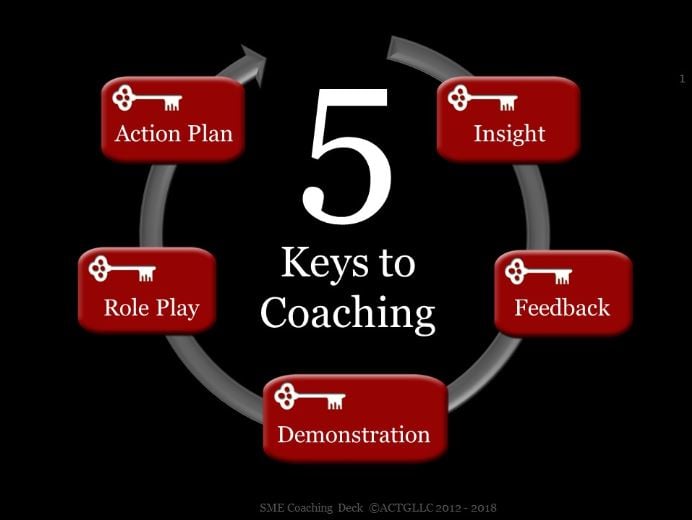
  1. Each coaching session must end with an action step: eg. “Mike, what I want you to do now is to call ABC Company and talk to your contact.  Have the discussion we just role–played and report back to me by the end of business tomorrow.”  Without action steps your sales people will leave these 1-on-1 coaching sessions and promptly forget the discussions. Unfortunately by next week you will be wondering what they did differently, if anything at all.

These 5 Best Practices are not meant to be the all-inclusive list of steps required by sales managers to drive sales productivity.  You must still have steps and strategies to motivate your people, recruit more of the right talent, have great sales meetings, develop teams that work together etc.  But focusing on these 5 Best Practices will help you develop a more credible, valid and consistent pipeline.  This is important to you, your people and the company.

Book Your Complimentary Coaching Call

Additional resources:

CRM best practices-An article by Izzy Witts at Bablequest.com

9 Keys to Coaching Sales Success  Are you a great coach?

Topics: Pipeline management, Effective Coaching, sales management, Sales Coaching

Beware Sales Team!

Posted by Tony Cole on Fri, Sep 22, 2017

Despite how good a high powered team looks on paper, there are always “skeletons in the closet”.

This post was prompted by an article from Bank Investment Consultant: Why Advisors Will Feel Freer To Make Career Moves in 2018 by Mark Elzweig.

It's not that I'm against sales teams leaving one company for another. But over the past 25+ years, I've seen too many of these moves fail-- Fail to work out for the hiring firm and fail to work out for the team.

sales growth team.jpg

Here is what you should be cautious about if your company is considering this tactic:

  • The book of business the team says they control is never really under their control. Just like your company’s business belongs to the company, the revenue the team plans to bring actually belongs to their current employer company.

So ask yourself:  What would you do in this situation? Of course, you would fight your *ss off to keep the clients and the revenue and chances are, you would keep at least some.

You would probably involve lawyers, an expense in time and money. This means delays in the high powered team’s production. In the meantime, clients are being contacted by the employer company and they are being seduced into staying where they are.

  • These people come from a culture with systems, processes, and procedures that are different than yours, perhaps considerably different. Often this is not an easy fit and in some cases, it is quite difficult. If this team is truly high-powered, these people probably got away with some things that you wouldn’t tolerate. You may not tolerate certain behaviors to which they have become accustomed.
  • At some point in the future, the acquired team inevitably forgets that they said “Yes”. “Yes” to how they would be managed, “Yes” to the goals set, “Yes” to the business processes and “Yes” to the compensation package. They will have selective memory and problems will arise when they remember promises they thought they heard/wanted to hear.
  • You may discover that they really aren't as good as they indicated. Unless you do a deep dive into how they actually generated all the revenue they boasted about, you might find out that some of the revenue was inherited, or that their former company had certain products and services that gave them an unfair advantage which you don't have. Maybe the production came from a couple of major accounts that grew on their own and these individuals were more account managers/ farmers and not the hunters you needed and thought you were getting.
  • If they came from a 'brand' organization and you are a solid, but second tier organization (not a well known brand), you may discover that this team succeeded because of the logo, name and reputation of the brand.
  • If your company is like most, it may oversell the team. Pride in one’s organization is common and is positive, except when hiring. Selling the positives and minimizing the negatives will come back to haunt you when the new talent recognizes they traded one unsatisfactory situation for another.

Recruiting talent, poaching teams, and growing your organization by increasing talent numbers is difficult. Despite the method you choose, there are always risks.

Below are the keys to minimize the risks of bringing in a team from a competitor:

  • Develop your own team to be high performing. Make sure you have a Sales Managed Environment that has a keen focus on performance management, intentional coaching, and recruiting.
  • Recruit the best talent for the specific role. Everyone is competing for "A" players, but you don't need "A" players to grow your business. What you need is...
  • Recruit people who are better than those you have today!
  • Don't be desperate. Have a process to grow sales. Follow the process. Hold people accountable to behaviors and numbers. Be proactive in recruiting.

Should you decide to risk acquiring a high-performance team from a competitor, make sure that they are clear on all aspects to which they are agreeing prior to hiring.

Find Out More about our Fall Sales Workshops

Topics: hiring sales people, building sales teams, building sales team

What Does It Take to Create & Convert Leads (and also Hire Those Who Will)?

Posted by Tony Cole on Fri, Sep 15, 2017

What does it take generate and convert leads and hire sales people who can consistently perform this ultimately necessary job?  

Lead Generation Equation:  Effort +Effectiveness = Leads

Hiring the right sales people who can perform this job requires:

  1. Knowing what skills and behaviors to look for in a new candidate
  2. Having a system and process to find these special people
  3. Assessing and interviewing for the critical ‘hunting’ skills

But it’s not that simple.  Every president and sales manager I’ve talked to over the last year, tell me that the biggest challenge their sales people face is creating enough leads, converting those leads to opportunities and then converting the opportunities to revenue.

DOWNLOAD our FREE eBOOK -   Why is Selling So #%&@ Hard?

If you’ve read my posts in the past you may have stumbled across one that talks about growing up on a blueberry farm in Hammonton, NJ.  Little did I know at the time that my early life would help me better understand the world of selling.  Growing up on a farm is about surviving.  Our family survived season after season, year after year.  We were never rich, never had extra money, were never able to save for a rainy day much less put money away in a retirement account.  Surviving then (and probably now for most of those who work in farming) required three important skills and behaviors and discipline to be successful.

I assure you that none of the following three “lead generation and selling” activities were easy.  These activities required a commitment to succeed, a not-an-option mindset, specific skill sets and a vow to do everything possible to succeed.

  • Hunting – my dad hunted, had to hunt, to put food on the table for six of us.
  • Farming – we grew blueberries, peaches and strawberries. Mom and dad sent hours canning peaches and freezing strawberries and blueberries so mom could make pies in the winter.  They also bartered for tomatoes from neighbors and other local farmers and canned jars and jars of tomato puree.
  • Trapping – Years after I left the farm my dad started trapping muskrat and fox to make money from the pelts and had a garden that supplied their winter supply of canned vegetables. He also had a friend in one of the local rangers who would casually mention when there was fresh deer meat nearby.

 Growing sales requires lead generation.  Today’s lead generation activities are different than those of a few years ago, different because today’s prospects are different.  They are different because technology, the amount of information and the mobile ability to access information, has been a game-changer that favors the buyer

Today’s sales person can no longer rely solely on traditional prospecting skills and behaviors to generate leads.  Today’s successful sales person must have the hunting DNA but must also diversify efforts AND become more effective.

When we assess sales talent within an organization or screen sales candidates, we help our clients minimize the high costs of hiring ‘ghosts' with findings in several important areas that help determine if the sales person or sales candidate has the aptitude and skill to develop new business.

Hunting

As you can see from the exhibit below, very specific skills are needed to be a successful hunter. A hunter must be able to get past “gatekeepers” to reach decision makers, attend networking events and consistently prospect. 

But look at all the ‘stuff’ that you may not have known are critical to generating enough leads.  Generating leads today includes additional skills and aptitudes, as well as traditional people skills and aptitudes. Examples include: Uses sales 2.0 tools, gets referrals from customers/network, has no need for approval, WILL Prospect! 

Compare Your Salespeople on 21 Core Competencies

Topics: Prospecting, sales leads, generating leads, how to prospect, create & convert leads


    textunder

    Subscribe Here


    Most Read


    Follow #ACTG


    About our Blog

    Anthony Cole Training Group has been working with financial firms for close to 30 years helping them become more effective in their markets and closing their sales opportunity gap.  ACTG has mastered the art of using science-based data and finely honed coaching strategies to help build effective sales teams.  Don’t miss our weekly sales management blog insights from our team of expert contributors.


    Recent Blogs