ACTG Sales Management Blog

Sales & Sales Management Expertise Blog  

Mark Trinkle

Recent Posts

The Truth About Sales Prospecting Today

Posted by Mark Trinkle on Fri, May 01, 2026

In today’s world of selling, it is increasingly difficult to get the attention of a prospective buyer after only a few outreach attempts.

We know prospects are busy, but let’s face it, we’re all busy. The real question is this: how do you stay consistent and persistent in your outreach while remaining sensitive to your prospect’s time, priorities, and daily distractions?

Sales prospecting has always been a difficult task for salespeople, especially when it comes to reaching the prospects they call and email each day. They call, they email, they follow up, and they wonder if anybody will ever do one of two things:

• Answer the phone.
• Return a voicemail or reply to an email.

While this is certainly not a new challenge in selling, engaging with prospects has become dramatically more difficult. If we go back to 2009, it took around 8-10 outreaches on average to engage with a prospect. Today, that number has risen to 16-18 attempts. Keep in mind that these are averages. Sometimes, it takes even more attempts across multiple channels before a prospect pays attention.

Recently, I was leading a sales training workshop in Dallas, and a high-ranking bank executive asked me why I thought the number of outreaches required has increased so dramatically in the world of sales prospecting. In my judgment, there are three main reasons.

1. Distraction

Prospects are busier than ever before and are constantly battling the distractions that come their way. Their mobile device buzzes, and they have to look. The email notification on their computer sounds, and they can’t resist. Some have estimated that the typical person picks up and puts down their mobile device between 200-300 times each day.

2. Competition

There is more competition than ever before, and it is fiercer than ever before. Online resources, AI options, and apps on every device all contribute to a chaotic, competitive world where prospects have more choices and more noise surrounding them.

3. Commodity

Unfortunately, in some industries, the prospect believes that the vendor calling them and the vendor they currently use are essentially the same. The prospect does not see any meaningful difference.

To them, a bank is a bank. An insurance broker is an insurance broker. A technology provider is a technology provider.

Of these three reasons, the third is the most concerning, or it should be. If you do not differentiate yourself from your competition by providing value, your prospect will do the differentiating for you. But they will not use a measuring stick of value. More often than not, they will use a measuring stick of price.

So, what can you do to improve your sales prospecting success?

Add value.

Giving Instead of Selling

Value does not begin when you present a solution. It begins with how you show up in the sales prospecting process.

The most crucial principle of a value-based selling approach is focused on giving to your clients, not taking or selling. Read the book Go-Givers Sell More. Unlike other methodologies, value-based selling is not about what products and services you offer. It is about what the client wants and how you can help them achieve their goals.

You’ve heard the saying, “It’s about the journey, not the destination.” Value-based selling, especially in financial services, is a relationship-building process. Part of your value is the process you take prospects through as you provide advice, ask questions, and help them think differently about their challenges.

Give a Listening Ear

You may have had this experience before: someone asks you a question, and before you finish answering, they are off to the races with their own stories and thoughts, interrupting you along the way.

That is not a good feeling when it happens, right?

You want others to hear you when you speak. Unfortunately, financial services salespeople are often guilty of doing the same thing. A salesperson might ask, “What do you plan to use these funds for?” and then immediately jump to a product solution without asking any further questions.

Using a value-based sales approach requires you to go deeper in discovery. You must become better at asking good questions and listening first. Skilled salespeople know they can learn almost everything they need through the process of asking and listening, and that is what builds trust.

See how many questions you can ask before proposing a solution. It will become easier with practice.

Spend Time Getting to Know Your Client

In the world of financial services sales, every client is different. The early stages of the sales process should be used to learn as much about them as possible.

Identifying the different relationships with your clients, thinking about what has worked for other similar clients, and sharing relevant examples can help you develop credibility with new relationships.

What do you bring to the table for your prospect that no one else does?

Surely your product can be found elsewhere, so your value must come from more than the product itself. Your experience uncovering issues, asking better questions, and solving similar business challenges is what spotlights your value.

Follow Through Using a Process

Value selling in financial services is not easy. Becoming masterful takes consistent focus, work, and insight.

We know through thousands of evaluations that elite salespeople utilize a consistent sales approach process because it works. Strong value-based salespeople care deeply about the benefits the customer receives, and they are disciplined enough to follow a process that helps uncover the right solution.

That same discipline matters in sales prospecting. If most salespeople give up too soon, then consistency itself becomes a competitive advantage.

Here is another sobering statistic about the world of modern-day sales prospecting. While the average number of attempts has increased to 16-18, most salespeople quit after fewer than 5 attempts.

Maybe they think the prospect is being rude by not replying. Maybe they think that, “in the good old days,” people used to return calls. Regardless, the world has changed.

Prospects are a hard fish to catch. You might need to be out there fishing just a bit longer than in the past, with something much more enticing on your hook.

Do You Need More Leads? –  Free Sales Prospecting eBook Download

Banking Sales Strategies: Give Your Lenders the Courage to Succeed

Posted by Mark Trinkle on Fri, Apr 17, 2026

In a recent national broadcast, Mark Trinkle, Chief Growth Officer at Anthony Cole Training Group, sat down with Kevin Brewer, Chief Sales Officer at Citizens National Bank, to talk about a challenge many banks face today: how to give lenders the courage to succeed in a competitive environment.

As Community Banking Month highlights the vital role community banks play in their local economies, conversations like this one reinforce what drives that impact: strong lenders who know how to build trust, create value, and consistently perform.

Mark opened the conversation by setting the stage. Top lenders, he explained, can drive nearly 10 times as much revenue as lower-performing lenders. They’re also four times more likely to exceed expectations. But despite that impact, they’re rare — making up only about 16% of lenders.

Kevin agreed. “They are rare to find,” he said, “and to get one on your team is a blessing.”

Every one of these situations requires some “selling”, and in every situation, you had to make a case for why the outcome you desired was a good outcome.  That, my friend, is the essence of selling.  So, why do sales get stuck?

What Makes Top Performers Different

What separates those top performers from everyone else? Kevin didn’t hesitate. “They have a passion, but they also have ownership and commitment to do whatever it takes,” he explained. “If it goes well, they’ve worked hard and had help along the way. If it doesn’t go well, they’re asking themselves, ‘What could I have done differently?’ They don’t blame other things. They own it.”

That idea of ownership became a central theme throughout the conversation. Mark reinforced it: “Accountability comes down to owning the outcomes you’ve created.” Because in banking, it’s easy to fall into the habit of blaming external factors — the economy, competition, rates, or even the prospect. But the best lenders don’t do that. They take responsibility for their results.

Banking sales strategy tip: evaluate new lenders for ownership and passion.

The “Will to Sell” Problem in Banking

From there, Mark introduced what Anthony Cole Training Group calls the “Will to Sell,” which includes desire, commitment, outlook, responsibility, and motivation.

Kevin’s perspective on motivation was clear. “The top performers have something internally,” he said. “I don’t know if they want to win more or just hate losing, but they have something that makes them wake up every day and go get after it.”

But when Mark asked whether that motivation can be taught, Kevin was honest: “It’s hard to give somebody motivation. You can encourage them, but some people just want it more than others.” Mark agreed and took it a step further. “You can’t teach someone to care.”

That’s what makes desire and commitment so critical — and so difficult. Leaders can coach skills, but they can’t manufacture drive.

Banking sales strategy tip: evaluate your team for desire, commitment, outlook, responsibility and motivation.

The Reality of “Accidental Salespeople”

One of the more relatable moments came when Mark talked about how many lenders end up in sales. Most didn’t choose it. “I don’t think many people grow up saying, ‘I want to be a banker,’” he said. “We have accidental bankers — and most of them found themselves in sales by accident too.”

Kevin agreed. That reality helps explain why many lenders struggle with selling. They don’t see themselves as salespeople, and as a result, they often take a more reactive approach.

“They’ll come to us,” is a common mindset. But Kevin made it clear why that’s risky. “There are good bankers out there hustling,” he said. “They’re going to be calling on your customers. People don’t just walk into banks anymore.”

Why Asking Tough Questions Matters

As the conversation shifted to consultative selling, Mark emphasized the importance of asking questions — not just surface-level ones, but tough questions.

Kevin explained why that matters. “When we ask tough questions, it helps us understand if it’s really a fit,” he said. “If it’s going to be a no, I want to know early.” But many lenders hesitate to go there. Kevin pointed out that sometimes it’s simply easier not to. “If we don’t ask the tough questions, people are less likely to tell us no,” he said. “And then we have something to talk about in our sales meetings.”

Mark added another layer. “Salespeople work hard to get the meeting. The last thing they want to do is ask a question that might end it.” But avoiding those questions often leads to stalled deals and missed opportunities.

Banking sales strategy tip: sales leaders must do regular pre-call and post-call reviews with lenders to help them develop a consultative questioning approach

“Nice to Have” vs. “Must Have”

This hesitation often keeps conversations stuck in the “nice to have” category. Kevin shared how that plays out from his perspective. “I’ll have vendors call me, and I’ll think, ‘That might be nice to have,’” he said. “But in the back of my mind, I know it’s not going to happen this year.” The issue isn’t whether something is appealing — it’s whether it’s compelling enough to create action.

Mark explained it this way: “You can’t win by being a little bit better. You have to be miles better.” To do that, lenders need to uncover real problems and determine whether the current relationship is breakable. Without that, even a strong offering won’t move the deal forward.

The Importance of a Sales Process

Another major theme was the role of a structured sales process. Mark made a bold claim: implementing a strong, milestone-based sales process can increase sales by 20% on its own.

Kevin backed that up from experience. “It’s really hard to lead a group if you don’t know where they’re at,” he said. “A process helps us stay disciplined. It helps us ask the right questions and understand where we are in the deal.”

Without it, everything becomes inconsistent. “It feels like everyone is doing their own thing,” Kevin added. “And it’s hard to measure or improve.”

Banking sales strategy tip: implement a proven and effective selling system and track all prospects in your pipeline within these sales system stages

Selling Value vs. Competing on Price

As the discussion continued, Mark introduced another key distinction — selling value versus selling on price. Some lenders can only win when they have the lowest rate. Others can win even when they’re not the cheapest. The difference comes down to how they sell.

Kevin explained why timing matters. “It’s hard at the end to explain your value if you didn’t show it at the beginning,” he said. “You have to ask questions in a way that demonstrates value early.”

Mark reinforced that idea. “Why would they pay more for something they never saw?” If the conversation starts with pricing, it usually ends there.

Banking sales strategy tip: value begins with the development of a unique sales approach. Take time to practice this with lenders and develop actions to differentiate from others

Strengths — and Gaps — in Banking

Despite the challenges, the conversation highlighted some strengths.

Bankers tend to be strong relationship builders and are often good at getting in front of decision-makers. But even there, gaps remain. Kevin pointed out that while lenders can get to a “yes,” they often struggle with urgency after that point.

“We’re good from the beginning to a decision,” he said. “But from that decision to closing, we struggle with urgency.” Mark summed it up simply: “The most urgent person usually wins.”

Final Takeaways

As the session wrapped up, Mark recapped what separates top-performing lenders:

They have a strong will to sell.
They ask better questions.
They uncover real problems.
They follow a process.
They sell value.
And they create urgency.

The encouraging part is that many of these skills can be developed. But as both Mark and Kevin made clear, it all starts with something that can’t be taught: The desire and commitment to succeed.


If your bank is looking to strengthen these sales strategies and drive more consistent performance, we can help.
Explore our Banking Sales Training


Financial Services Sales Strategies: Negotiating Price

Posted by Mark Trinkle on Fri, Mar 20, 2026

Negotiation, by definition, is to deal or bargain with others in preparation for a contract or business deal. As a verb, negotiate also means to move through satisfactorily. In the world of financial services, both of these definitions are relevant and important.

Often, sales negotiation tactics seem to focus on price, seeking or offering the best rate or fees for a product or service. Here is what we know to be true about rate or price reduction requests. We call them the 3 Immutable Truths:

  • It does not cost a prospect or client anything to ask for a better deal
  • The advisor’s tone and response will set the tone for future negotiations
  • If they don’t move the conversation away from rate toward value, they will always be negotiating rate

How to Respond to Price Objections in Financial Services Sales

To respond effectively to a rate or price request, financial services salespeople must be assertive, adept at asking questions, strong listeners, able to sell their value, and skilled negotiators.

Top-performing bankers and insurance producers know how to do this. With finely honed consultative skills, they can guide the negotiation toward the best possible outcome.

Why Consultative Selling Strengthens Financial Services Sales Strategies

We are often asked about training on financial services sales strategies, particularly around negotiating price, fees, and premiums. While important, the real strength of top producers lies in being inquisitive, curious, caring, and consultative.

While negotiating is about landing on an agreed-upon “fair deal” for both the prospect and service provider, consulting goes much further. A consultative seller comes prepared to a meeting, fully understanding potential issues a company may face, along with industry trends and challenges.

Top producers have their questions prepared, tailored for resonance, and have practiced answers to anticipated questions from prospects. These are foundational skills of a consultative seller and can be developed through a strong pre-call plan.

The Mindset of Top Financial Services Sales Professionals

Top financial services providers bring much more than preparation and sales negotiation tactics. Their questions stem from a genuine desire to understand, an open curiosity about the challenges a business owner may face, and a drive to learn more.

They aim to connect solutions with problems, even if the solution is not their own. These sales professionals are genuinely interested and, importantly, humble in their approach. They are confident in themselves and their organization, while remaining empathetic with their clients.

Through skillful questioning and listening, they help prospects and clients self-discover what needs to happen to solve their business problems.

Building Financial Services Sales Strategies Around Trust and Advisory Roles

A key component of developing a team’s financial services sales strategies is focusing on a consultative approach. This often leads to an advisory role, which is what producers and bankers strive to achieve with their clients.

When they become a trusted advisor, they can support clients on a much broader level than just products or services. They become part of the client’s inner circle, influencing decisions related to change and growth.

While sales negotiation tactics are important and often lead to satisfactory agreements, a truly consultative seller plays a critical role in business success, contributing to growth goals and improved profitability.

Negotiation vs. Consultative Selling Skills

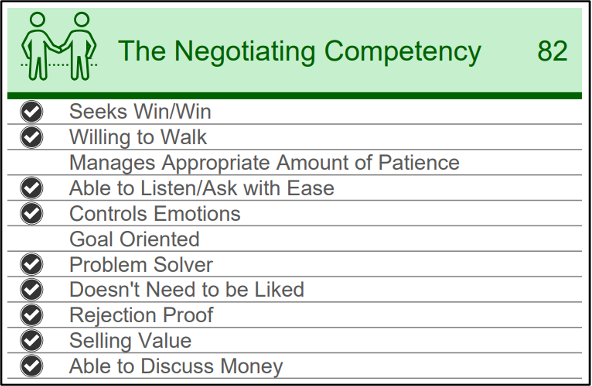
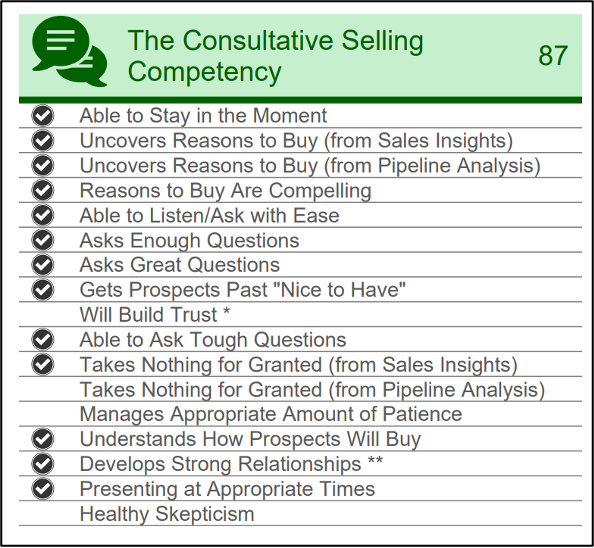
Referencing data from our partner and the #1 sales assessment in the world, Objective Management Group, there are both similarities and differences in the skills required for strong negotiators and consultative sellers.

Here are the skills that strong negotiators have mastered:
Picture1-Mar-20-2026-01-36-58-1875-PM

Now let’s take a look at the skills of the consultative seller:
Pictur2e1

Final Thoughts on Financial Services Sales Strategies

In today’s environment, the ability to skillfully negotiate price while also maintaining a consultative approach is essential. These are core financial services sales strategies and true game changers for most sales organizations.

Discover more about the 21 Core Sales Competencies to continue strengthening your team’s performance.


Ready to develop stronger relationship-building skills across your sales team? Download our free eBook The Relationship Selling Guide for proven strategies and frameworks, or contact Anthony Cole Training Group to learn how our assessments and coaching can transform your team's ability to build rapport and close more business.

free download

Topics: financial services sales strategies

Speaking the Prospect’s Love Language: An Important Sales Skill

Posted by Mark Trinkle on Fri, Feb 13, 2026
 
Strong pipelines start with strong first conversations. When your salespeople understand how to lead with relevance, they create better engagement, more productive meetings, and stronger momentum throughout the sales process.
 
Speaking a prospect’s “love language” is an important skill your sales team can develop. It means focusing on what matters most to the prospect, their current challenges and future growth goals, and using those insights to open meaningful conversations that move opportunities forward.

What Is a Prospect’s “Love Language”?

Prospects don’t respond well when salespeople fail to tailor their message for resonance. In other terms, that means your salespeople are not speaking the prospect’s love language.

A prospect’s love language comes down to two things:

  • The problems or challenges they are dealing with right now
  • The future growth opportunities they see on the horizon

When your salespeople lead with anything other than those two areas, they risk wasting the prospect’s time and missing the opportunity to move the relationship forward.

Salespeople often fall into the trap of leading with product features, company history, or generic value statements. What prospects care about is whether your salesperson understands their world and can help solve real problems or support real goals.

That is where many sales conversations go off track.

The Two Challenges Facing Financial Services Sales Teams

As a national sales training and coaching firm, Anthony Cole Training Group has a front-row seat to what is happening inside financial services sales teams across the country. Two challenges consistently rise to the top.

1. Fewer Quality Prospect Meetings

With fewer face-to-face meetings over the past several years, many salespeople have struggled to adapt their relationship-building skills to a virtual environment. Resistance to meetings has increased, and too many salespeople do not know how to work through that resistance.

The result is fewer quality conversations and fewer opportunities entering the early stages of the pipeline.

2. Margin Erosion at the Finish Line

When a deal finally starts moving forward, many salespeople become overly focused on simply getting it across the finish line. They cave on rate or price to close rather than protecting value.

Over time, this behavior erodes margin and conditions prospects to expect concessions.

So, guess what? We lead with those two things… and nothing else. Because those are the issues prospects actually care about.

Prospects are far more willing to engage when they feel understood. When your salespeople speak directly to a prospect’s challenges and growth objectives, they immediately separate themselves from competitors. They become relevant. They earn the right to continue the conversation.

Coaching for Relevance and Results

Too many sales teams still operate with a “hope strategy.” They hope prospects will be interested. They hope meetings will go well. They hope deals will close.

High-performing sales organizations do not rely on hope. They coach their salespeople to lead with purpose, preparation, and messaging that resonates.

  • If you want more meetings, coach your salespeople to lead with what matters to prospects.
  • If you want stronger pipelines, reinforce early-stage activity.
  • If you want healthier margins, hold your team accountable for selling on value instead of price.

Teach your salespeople to lead with prospect priorities, and you’ll build stronger relationships, healthier pipelines, and more consistent growth.


Register for our upcoming live webinar to learn why top lenders drive up to 10x more revenue than bottom performers and uncover the four qualities that define diamond-level relationship managers! You’ll gain practical insights on developing stronger producers and access a free tool to benchmark your team’s relationship-building skills. Free registration, recording provided.

Give Your Lenders the Courage to Succeed Webinar-3


Ready to develop stronger relationship-building skills across your sales team? Download our free eBook The Relationship Selling Guide for proven strategies and frameworks, or contact Anthony Cole Training Group to learn how our assessments and coaching can transform your team's ability to build rapport and close more business.

free download

Topics: sales conversations

Improve Your Sales Performance

Posted by Mark Trinkle on Fri, Jan 23, 2026
 

Make Small Improvements to Drive Better Sales Performance

The beginning of the year is a natural time to reflect on what occurred in 2025 and to look at 2026 in terms of what your team must do to improve sales results (or, if they had a good year, what they need to do to maintain those results). As sales leader, you would be wise to remember that “what got you there won’t keep you there.”

At Anthony Cole Training Group, we have always adhered to the Japanese business principle known as “kaizen,” which translates to gradual self-improvement over time. In short, kaizen suggests that minor improvements can have a dramatic result when those changes are compounded over many years.

We know that salespeople fail for only two main reasons:

  1. Lack of effort
  2. Lack of skill

So, what would the kaizen impact look like in terms of making some improvements in your team’s sales process? What might your sales results look like if they made some changes within their skill sets to improve sales performance?

Let’s start by acknowledging what we typically hear, which is a salesperson saying that they can’t possibly work any harder. They have grown tired of their leader beating the same drum of “you need to work harder” (more effort). While that can be true for some, for most salespeople, the road to improving sales results is best traveled by taking a different route.

How Incremental Change Improves Performance

What if your salespeople committed to getting 10 percent better in just a few key areas moving forward? What would happen if, on a weekly basis, they made 10 percent more calls? Instead of making 20 calls per week, could they make 22 calls? Making 2 more calls per week will not break them. What if you worked with them to improve their discovery skills on sales calls just ever so slightly and went from finding 2 new opportunities each week to finding 3 new opportunities each week? And what if they were able to make a slight improvement in their closing skills? What if their closing percentage went from 20 percent to 25 percent?

Here’s an example of what happens if one of your producer’s improves by 10% in just three different areas of their sales process. This incremental improvement drives an additional 57% in sales!

image005

The reality is your salespeople might not need to work any harder than they are currently working. This is not an extreme “home makeover”. Most of your people do not need that. What they do need is to find just a few areas in their sales process where they can make a slight improvement in 2026. Those changes might seem to be insignificant but your team results in 2026 will be far from that.

Meet with one of our  Financial Services Sales Experts

Topics: sales performance


    textunder

    Subscribe Here


    Most Read


    Follow #ACTG


    About our Blog

    Anthony Cole Training Group has been working with financial firms for close to 30 years helping them become more effective in their markets and closing their sales opportunity gap.  ACTG has mastered the art of using science-based data and finely honed coaching strategies to help build effective sales teams.  Don’t miss our weekly sales management blog insights from our team of expert contributors.


    Recent Blogs