ACTG Sales Management Blog

Sales & Sales Management Expertise Blog  

Tony Cole

Recent Posts

How to Create & Build Relationships Virtually

Posted by Tony Cole on Wed, Sep 23, 2020

Virtual relationships aren’t new and neither are virtual business relationships. What is new are the expectations and the tools. Instead of in-person meetings, we are now expected to meet via Zoom, GoToMeeting, Facebook Live. Technology is consistently providing us with more and better ways to connect. We must now:

  1. Become comfortable with virtual-relationship platforms (social networking),
  2. Transition from traditional to virtual relationship-building habits and platforms,
  3. Learn and master the art and science of virtual relationship prospecting, creation and development.
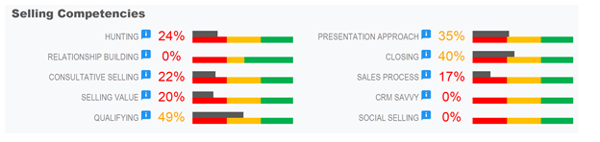
  4. Have a good grasp of our current strengths and weaknesses in relationship-building so we can better understand what we need to improve upon in virtual relationship-building.
  5. Understand that the advent of pandemic(s) may greatly alter the willingness of prospects to meet person-to-person, thus changing the landscape of prospecting and selling forever.

“The web has one big drawback: It’s harder to connect on a human level with people when they exist in two dimensions on your computer screen or mobile device. You need to work extra hard to make sure you’re interacting in a way that allows you to build genuine, meaningful relationships.”

“People want to work with colleagues they know, like and trust. When building professional relationships with people online, consider the intersection of these three qualities: transparency, likability and credibility. Transparency lets people get to know you, while likability reflects their interest in you and credibility builds trust.” William Arruda Senior Contributor Forbes 

person-writing-on-notebook-4145190-1

This shift in the way we conduct business may have changed permanently and we must change with it. We need to understand and adapt to this cataclysmic shift so that we may be successful in this volatile new environment.

Here are the key concepts, practices and skills that should be considered and employed as you move forward growing your sales.

Key Concepts

  1. Prepare yourself for the following:
    1. It will be easier for people to ignore you. It will take longer to connect.
    2. “Don’t look, act or sound like every other salesperson.”
    3. Develop a tenacious Will to Sell (watch video or click link) to be successful.
    4. Overcome any negative beliefs you have about virtual relationships: e.g. “I can’t sell virtually”.
    5. Whatever challenges you have in the normal course of selling, be prepared for those challenges to be magnified.
  1. Best Practices – you must have a set of best practices.
    1. Have a checklist for each meeting:
    2. Do a rehearsal prior to the meeting. Have any presentation pre-loaded and ready to show.
    3. Check that lighting, audio and video are all in good working condition.
    4. In advance, share your agenda.
    5. Be yourself- be vulnerable, transparent. Don’t dominate the conversation to fill space. Ask questions. Listen intently.
    6. Use virtual backgrounds if your room is a garage.
    7. Dress appropriately for the meeting.
    8. Be memorable and unusual in a good way
    9. Know what your competition is doing virtually. While you don’t necessarily have to compete, you should understand how your virtual room will be evaluated.
    10. Finish each meeting with a clear next step.
  1. Common issues:
    1. Camera Angle and Distance- Spend time to view how others will see you. Eliminate distractions and “nose shots”.
    2. Fumbling to find and load a source or presentation.
    3. Finding a good tempo; one that will hold audience attention.
  1. Any weakness you have in personal meetings will be magnified on camera. Your desire, commitment and outlook must be strong. Your SALES DNA must support building and selling relationships in a virtual model. (Score your Sales DNA)
  2. Hone your sales process and approach. Because so much at the beginning of the sales cycle/buying cycle lays the groundwork for the proceeding steps, gaining trust and confidence while operating virtually might take longer. For example- You might have to do a better job with Proof of Concept. Or Qualifying might require different questions. Remember to Qualify for Budget and Decision-Making.

Our Sales Growth Coach can help you leverage virtual tools!

Topics: closing more sales, sales priorities, sales productivity, sales advice, sales effectiveness training, virtual selling

6 Lessons for Sales Organizations I Learned on My Summer Vacation: Part 2

Posted by Tony Cole on Thu, Sep 03, 2020

Being successful in sales requires continuous growth and learning from day-to-day experiences. Identifying those buyer's you can actually help by doing great research and keeping detailed prospect notes, it part of that success.

MIVacation2

Last week, I wrote a blog that covered the first 3 lessons I learned during my recent RV vacation to Michigan with my wife, Linda. If you missed it, here it is! This week, I review the final sales lessons I took away from our time on the open road.


4. Do your homework! We booked a spot at the Bluff of Manistee. Sounds nice, right? I will not throw them under the bus, but let’s just say that we left after a very brief deliberation about the “concrete jungle”. We immediately started googling and found a spot at Orchard State Beach in Manistee.  

  • It makes sense to do some homework before you call on someone, especially when cold calling. You must get a feel for their business, challenges, organizational structure, and find out anything you can about their current business state. This helps you frame your questions so that you sound well-informed about them and their industry. This knowledge and understanding help you more quickly establish credibility.
  • Understand that what you think you know might not be true. Not that a company would intentionally lie or be misleading but understand that they are looking to put their best foot forward. So be cautious, ask more questions, and work to validate what you think you know and inquire about what you don’t.


5. Record the adventure when you travel. Take too many pictures. Make too many notes. It will help you remember why things went well or why you might do something different in the future. You will also be able to share that information and help someone else. One thing we learned about every RV’er we met is that they were all willing to share.

  • Record your notes in your CRM. Check off steps as you complete them. Any documents you send, make sure you upload them to the prospect's file. Be willing to discuss your opportunities with others so you can learn, and they can learn.
  • Go back and look at your notes so that as you progress through the process, you do not have to remember everything. It’s DOCUMENTED! This will free you up to pay closer attention when you are meeting with your prospect.


6. Someone always needs help. The “someone” in this case happened to be the horses at Reality’s Chance in Lake Pleasant Michigan. It’s a wonderful spot: a sanctuary for at-risk horses founded by a wonderful person and run by a group of volunteers that care so much about the work they do. It seems like it would be an endless quest to save all the horses, but helping just one at a time makes a difference to THAT horse.

  • There are plenty of people in your marketplace that need help. Not just any help but specialized help. Kind of what Lauren does for Mustangs at Reality’s Chance. You must be the provider of that specialized help.
  • To be that specialized resource, you cannot look, act, and sound like everyone else. You must have a different approach, have different conversations, and focus on presidential issues and business solutions instead of your products and services.

Sign Up for our Sales Brew

Topics: coaching sales, Sales Growth, sales development, Business Development, driving sales growth 2020

6 Lessons for Sales Organizations I Learned on Summer Vacation: Part 1

Posted by Tony Cole on Fri, Aug 28, 2020

Everyday, there are things that can be learned that can impact our personal and professional lives.


In this week's blog, our Chief Learning Officer Tony Cole will discuss a few of the sales lessons he took away from his summer vacation.

MIvacation

Linda and I just came back from our first big RV camping trip where we visited Michigan. Upon my return, I received an email from Alex asking me if I had any brilliant insights to share with you all from my trip that might relate to growing sales. Here are the first 3 of 6 lessons I learned during our trip.


1. Enjoy the journey. We learned that there is normal travel time, and then there is RV time. My google maps would tell me I had a 240-mile, 4-hour journey, and I would arrive at 2:14 PM. I would drive for 30 minutes, look at my google map only to discover that I now had a 241-mile journey and I would arrive at 2:22.

  • As you plan your sales success, you must understand that the journey will take longer, and you will likely run into detours, accidents, and slowdowns.

  • If you do not slow down and enjoy each stop along the way, you will become irritable and frustrated. This will cause you to move things along faster and, when you do, you will miss steps and sights along the way, damage relationships, and potentially get lost.


2. Have a process and follow the process. For those of you that have RVs, you understand what I am talking about. You have to make sure that certain steps are taken so that you don’t; rip vents off of the roof, have contents falling out of your storage bins, leak your freshwater reserve, run out of propane, or get a flat tire.

  • What we know thanks to the Objective Management Group is that 95% of Elite or Strong Salespeople (roughly only 25% of all 2 million salespeople assessed) follow a consistent sales process. What is important to note today though, is that the process is more of an approach so that the salesperson can focus on the buyer’s process.
  • Don’t assume you’ve followed the process. Have a milestone-centric system within your CRM system (Membrain) so that you can check off each step along the way. There were at least 3 occasions on our trip when Linda would ask me, “did you…” and I would have to review my steps just to make sure I covered every detail.


3. Sales growth requires nurturing. Driving through Ohio and Indiana, you will see more corn then you ever imagined. As you get into the western region of Michigan you start to see signs for cherries, apples, blueberries, corn, peaches, and all manner of fruits and vegetable stands. It reminded me of my days on the farm and how we had to nurture plants to maximize production. It did not matter how old or young the plants were. They needed soil, water, sunshine, and food.

  • No matter where you are in your career, you need nurturing. You need to be replenished with new information, be reminded of what you’ve done in the past that led to success, and receive coaching to improve skills and change behaviors.
  • Nurturing requires balance. Too much of one thing is not good. So micromanaging is not a solid strategy. Self-management and openness to corrective coaching is the solution for consistent sales growth.

I am Interested in the  Sales Growth Coach

Topics: Sales Growth, sales development, Sales Coaching, Sales Process, driving sales growth 2020

2 Keys for Improved Sales Performance: Perception and Consistency

Posted by Tony Cole on Thu, Aug 13, 2020

Perfect practice prevents poor performance! To improve your overall sales effectiveness, you must become masterful at the skills required to be successful.

In today's blog post, you will learn why perception and consistency are critical factors when it comes to upgrading your selling results.

pexels-markus-spiske-114972

I’d like to blame my actual visual perception on my crappy golf game but the real problem is my consistency in practice. I’m not consistent. Therefore, my consistency on the golf course is non-existent, which leads to scores anywhere between 92 and 102. 

I can shoot a 44 on the front and a 54 on the back. Don’t get me wrong being virtually blind in one eye doesn’t help with depth perception, which sucks when you are trying to figure out how far the pin is from your ball. Yes, I have a device on my phone that tells me the distance, but I assure you it doesn’t help. And it makes for some good laughs when I’m trying to light candles on a birthday cake. Just ask my daughter Alex.

Let’s talk about these two contributing factors and how they impact sales performance.

Perception

It has been my observation for over the last 25 years that salespeople tend to lump all sales calls into product categories:

  • If you are a lender, most all of your sales calls start with you talking to someone to figure out if they need a loan or how you can help them have access to capital.
  • If you are in employee benefits solutions, you approach all of your calls with the intent on how to help them get better coverage and better pricing.
  • If you are a property and casualty agent, you focus your attention on risk vulnerabilities, risk assessments, and price.
  • And finally, if you are an investment advisor, you tend to focus on where people can put money to generate a great return, minimize taxes, or reduce the risk of losing money.

All of these scenarios occur because of our perception of what the client wants or needs. The perception exists for one of two reasons:

  1. Our years and experience in the business
  2. The words the prospect used when we set up the initial call

There are two problems here: 

  1. Years of experience have nothing to do with the current condition. Let’s go back to golf for a minute. One of the things that make the game so interesting, great and frustrating is that you never really play the SAME course twice. The weather conditions are different. The conditions in the fairway are different. The roll of the ball on the green can be different. And the pin placement always requires a different approach to your putt.
  2. What the prospect tells you initially is never the truth. Not that they are lying to you but they are not telling you the real problem. They normally describe a symptom to the problem or ask you to solve a problem that is actually caused by a bigger problem.  

If we close our eyes and don’t count on what we hear, then we would have to expand our thinking, which will change our perception of the problem we need to solve.

Trial the Highly-Predictive  Pre-Hire Sales Assessment

Consistency

In the elite and strong categories, we know that 80% of the top 25% of all salespeople follow a consistent sales process. What does this mean?

  • They have a process that is milestone-centric - it’s systematic in that when the steps are followed they lead to a conclusion of getting a decision thus eliminating think it overs and delays
  • They document the process and what happens at each step so they know if they are on the right track and if they need to go back and uncover information they may have missed
  • They can look at data to determine what choke points they may have that are keeping them from generating more sales, more quickly at higher margins
  • They can use the data to model success and repeat the process over and over again

Again, very much like a good golfer. During practice, or while on the course during a match, really good golfers have a systematic approach to their game. They approach the ball the same way on the tee. They position their hands the same way when attempting a bunker shot. They line up consistently when making a putt. Those that are consistent in their approach to golf will be more consistent in their scoring and will more than likely have lower scores than someone like me.

The reality is I would like to be better at golf, but I lack commitment. I’m not willing, at this time, to do everything possible to succeed at a higher level. The same might be said of your approach to selling. If you are not selling more, more quickly, at better margins, it might just be a commitment problem rather than a perception or consistency problem.

Sign Up for our Sales Brew

Certificate_Tony Cole (002)


Topics: sales performance, improving sales results, How to Increase Sales, consistent sales results, increase sales cincinnati

7 Things Companies Do to Thrive Anywhere, Anytime

Posted by Tony Cole on Tue, Aug 04, 2020

Regardless of the current state of business, it is easy to get caught up in managing day-to-day tasks. It's also easy to lose focus on the end goal and continue to take the necessary steps to move your business forward.  

If you and your organization need to thrive and not just survive, these 7 things can and will help!

JeffBezos-2This Photo by Unknown Author is licensed under CC BY-SA

With so much noise about the current environment, I wouldn’t blame you if you stopped reading now, but don’t! This is not the same old message about what to do in the middle of a crisis. This is information and direction for any organization any time they need to thrive.

Things companies do to thrive anywhere, anytime.

  1. To borrow from Jim Collins's book, Built to Last, great companies lean heavily on their core ideology. This emphasis is what makes companies visionary. Re-state your core ideology at every opportunity. Take this moment to become the visionary in your segment or industry. Make sure you have people that drink the ideology Kool-aid.
  2. Increase the intensity around achieving objectives. This doesn’t mean don’t have empathy for those that suffer either financially, medically, or socially. It does mean that the core of your organization will see you and your people through difficult times, but only if you remind them of the objectives, do not allow them to wallow in a pity party, and support them so that they can succeed.
  3. Focus on cash in the door. That means sales. Yes, sales will be tougher to get, and maybe fewer and farther between, but that just means you need to be more diligent about sales activities upfront. Raise the standards for activity, increase the frequency of huddles, use more data to help coach, and support and hold salespeople accountable.
  4. Hire great talent. Not just occasionally but all the time even when you don’t have the money or don’t have an open spot. What we know from our work with Objective Management Group is that of the 2M salespeople assessed, only 7% of them are at the "elite" level (Sales Quotient over 139). Another 18% score as "strong" (Sales Quotient between 130-1390). If the axiom is true – nothing happens until something is sold – then find great salespeople and hire them anytime, at any price. (Smartsize your organization NOW!)
  5. Improve the knowledge, behaviors, and skills of your people. There is a commitment to invest time, money, and resources to the development of the talent you hire. Recognize that your people, just like professional athletes, need constant conditioning, training, performance management, and coaching. Failure in this area is what leads to the "reverse" Pareto principle. I describe this concept in a recent article – The Evolution of Sales in 2020.
  6. Stay optimistic despite all of the evidence to the contrary. (Click HERE for the ‘There’s got to be a pony in there somewhere’ joke). When we started our work with Key Bank, Beth Mooney was fond of discussing the concept of "Shadow of the Leader". Quite simply it means that you as a leader, set the tone, posture, mental stability, and emotion for your organization. If you want your people to be energized and enthusiastic then it starts with you!
  7. They pick the can up and do something with it, instead of kicking it down the road hoping for a better time, a more appropriate set of circumstances, or for things to turn around. Great companies make things happen. They are creators rather than creatures of circumstance.

This brief outline requires many things from many people in your company. We can help in three areas:


  • Leading Through Change
  • Selling in Any Environment
  • Hiring Better Salespeople

Sign Up for our Sales Brew

Topics: Selling Success, sales management success, improving sales results, increase sales, upgrade your sales force, sales advice, sales acceleration, sales productivity tools, driving sales growth 2020


    textunder

    Subscribe Here


    Most Read


    Follow #ACTG


    About our Blog

    Anthony Cole Training Group has been working with financial firms for close to 30 years helping them become more effective in their markets and closing their sales opportunity gap.  ACTG has mastered the art of using science-based data and finely honed coaching strategies to help build effective sales teams.  Don’t miss our weekly sales management blog insights from our team of expert contributors.


    Recent Blogs