ACTG Sales Management Blog

Sales & Sales Management Expertise Blog  

Help Your Team with Cross-Selling & Up-Selling Strategies

Posted by Mark Trinkle on Fri, Jul 19, 2024

The concept of cross-selling tends to evoke skepticism and wariness. Over time, this skepticism has arisen due to some individuals with good intentions although accompanied by undesirable practices. Pushing product is often another term used for cross-selling & up-selling strategies.

Let’s explore why this skepticism about cross-selling exists.

The traditional perspective on cross-selling, if we were in discussion at a training session, would likely involve me asking the participants why we should engage in it. Common responses would revolve around increasing sales, driving market penetration, and enhancing customer loyalty to fend off competition. While these reasons may hold some truth, let’s shift the focus to this question: where is the emphasis placed?

The traditional rationale centers on the benefits to the company – more sales, increased market share, and customer retention. However, there’s a notable absence of consideration for the customer. This observation holds true in our experiences at Anthony Cole Training Group, where, despite our 30 years of engagement in this conversation nationwide, rarely does anyone express that cross-selling and up-selling strategies should occur because they genuinely are in the client’s best interest.

As sales leader, you should lead the charge to adopt an approach that will foster comfort for you and your team and also elevate the quality of the relationships you have built with your customers over time. To achieve this, we must entertain the possibility that the most compelling reason to broach the topic of relationship expansion with a client is the potential benefit to their best interests. It could be that your client is struggling with a problem they need assistance in solving. Here are ten keys to helping your team with client expansion, a much better term for cross-selling or up-selling:

  1. Remember the focus is on the client, not you or your company
  2. Take a consultative approach
  3. Demonstrate empathy
  4. Be curious and ask the right questions (takes practice)
  5. Engage in active listening
  6. Ask if they need your help
  7. Be their guide
  8. Make it your goal to take care of the whole client
  9. Focus on stewardship instead of selling
  10. Guide them to make sound decisions

You will encounter doubt and skepticism, no doubt. Your salespeople will likely think but not share the following:

  • If I ask for other business, they might think I’m greedy
  • I’ll ask for other business after I’ve proven I can do a good job for them
  • I’ve already asked them - they said they aren’t interested
  • I can’t ask for other business because it might jeopardize my current relationship
  • They already have a relationship with someone else that does that for them

If your team truly believes that they are stewards for their clients, many of these objections fall away. After all, by its very definition, stewardship is the job of taking care of something that has been entrusted to you. We will often coach salespeople to “think like the CEO” and ask CEO-like questions. Understanding the bigger picture that the prospect is operating from is always additive. A consultative approach to this will involve asking questions about growth goals of the company or retirement goals for the individual. What is keeping them up at night or getting in their way of reaching their plans? Understanding the environment and industry your prospect or client is operating in is essential. Remember the word “entrusted”.  As you reflect on your team’s success or challenges in the areas of cross-selling and up-selling strategies, have they earned the trust and operated as a steward for their clients? Let’s eradicate the term cross-selling and focus on relationship expansion and serving the whole customer.


Topics: Sales Training, sales training tips, cross selling, up selling

Effective Sales Meeting Strategies

Posted by Jeni Wehrmeyer on Fri, Jul 12, 2024

Every salesperson has attended sales meetings and left thinking “Why do I have to go to these meetings? They are a waste of time and are not helping me get better at selling.” Sales leaders and managers must own and address this problem. Attendees to sales meetings should leave the meeting thinking:

  • I never want to miss these sales meetings
  • I am more motivated to go sell now
  • I learned something today that will help me be more successful

Effective sales meeting strategies begin with understanding what it takes to be a motivational leader. We partner with Objective Management Group, the pioneer and leader in sales evaluations who has identified these 4 strengths in top performing, motivational leaders: they know what motivates their people, they have a strong self-image, they give recognition regularly, and they do not accept mediocrity. Another strength of motivational leaders is the ability to understand how their people are motivated, whether that is intrinsically or extrinsically. Tied very closely to understanding motivation is the ability to drive successful goal setting efforts to uncover both personal and professional goals that will motivate and drive the necessary activities to achieve established goals and results. Too many sales leaders do not understand how and why their salespeople are motivated. While there is no pixie dust to motivating people; if there was, it would be understanding what makes salespeople tick, whether it is college education for their 3 kids or recognition and status of being a top performer. Sales leaders must know this about their people.

All that said, what then specifically can help sales managers be more effective with their sales meetings? Ideally, leaders have two different kinds of meetings regularly with their teams:  Huddles and Sales Meetings. Huddles focus on burning platform issues, they are brief (15 minutes typically) and urgent on a consistent time/day & agenda and involve reporting on smart numbers/predictive indicators that drive success for the organization. Sales Huddles are a communication process that helps managers gain real-time information for real-time coaching and always include an action plan and follow-up.  Huddles help managers identify who needs coaching for future one on one coaching sessions. They also typically include a scorecard that stack ranks their people on the smart numbers, adding transparency and competitiveness to the Huddle. Here is an example of a Huddle Scorecard:

Picture1-Jul-12-2024-11-14-22-8930-AM 

For longer, usually monthly meetings, here are 4 effective sales meeting strategies:

  1. They must have a Purpose: Recognition, important sales information, interaction, learning, skill development
  2. They must have appropriate Frequency & Duration: Driven by the “sales cycle”, monthly recognition for success, long enough to cover sales but short enough to hold attention
  3. They must have a compelling Structure: CEO message (high-level production), results (stack ranking)
  4. They must share Great Content: Sales idea/concept, stories of success and failure, including examples outside of the company including Ted Talks and other motivational resources

If sales leaders deliver these 4 strategies above, they will likely have sales meetings that have their salespeople thinking “I never want to miss these.” Their salespeople will learn something, leave the meeting feeling motivated and with something that will help them TODAY. 

Much like a salesperson who should “never leave home” without a pre-call plan, sales managers must own the responsibility to plan, develop and deliver motivational sales meetings. Put your sales meetings to the test today by implementing these 4 effective sales meeting strategies above.


Topics: Sales Training, motivating sales people, sales training tips, sales meeting strategies

Don’t Leave Home Without It: Pre-Call Planning

Posted by Mark Trinkle on Fri, Jul 05, 2024

Remember the tagline and series of commercials by American Express, “Don't leave home without it?” In this case, we don't want salespeople to leave the office without pre-call planning and pre-call preparation. This is a specific discipline, a hallmark and habit of all great salespeople.

As we work with companies across the country and this topic is introduced, what’s interesting is the resistance that we often receive. The pushback typically comes in a number of different variations. One reason that we will hear is, “Hey I'm a veteran. I've got 20 years of experience. I've been down this road before. I know what I'm doing.” Another excuse we hear is “Listen, I'm really busy. I have a lot going on. I have a lot of calls I need to make. I don't have time for this.”  Other salespeople will say, “I'm just going to wing it. I will rise to the occasion.” And that last one makes me chuckle, and my answer is respectfully, you will not rise to the occasion. Here's what you're going to do. You're going to sink to the level of your preparation, which in your case, might be none or very little.

Sure, there are many things that a salesperson has to do well to be effective and drive consistent results year after year. You have to know your stuff, and you need to be charismatic, and be able to connect with people. You need to build relationships. You need to sell consultatively. You need to be asking all the tough questions. All of that is true. But most importantly, for your prospect or client’s sake, is that you've got to be prepared. It must matter to you enough that you will not think of a sales call as just a sales call. It must matter enough to you that you are at the top of your game every time you roll out into the field and you roll up to a prospect. You're not going to rise to your level of the moment, you're not going to rise to the occasion. That's the athlete in college telling the coach, "Put me in, and I'll show you what I can do." And the coach saying, "Why don't you show me what you can do in practice, and then I will put you in." That's the role of an effective sales leader and coach.

Let's dive right into this best practice of pre-call preparation. Are you or your team doing this or not? And if you're doing it, how well is it going? What is the current status of pre-call planning? Is it something you do all the time? Is it something you do only when you have the time? Is it having the intended effect of increasing your confidence as you go on the call and increasing the effectiveness of your questions while you're on the call?

Let's talk about combustion points. A combustion point, loosely defined, is any opportunity in the delivery of a company's products or services where something can go wrong. There are many things that can go wrong on a sales call. And the purpose of pre-call planning is to engineer out those combustion points. It is designed to not only minimize them, but also to give you a much greater sense of confidence so you can go into that call and get done what you need to get done. We would define that as being very consultative in your approach, asking lots of robust, fierce questions, and being a great listener. And if you don't pre-call plan for that, it is very likely that when the heat's on and it matters the most, you're just going to defer to whatever is known, whatever is comfortable, and whatever is easy. And for most salespeople, what is known and what is comfortable and what is easy, is to talk. They talk way too much.

A good ratio might be 80/20. 80% of the time it should be the prospect talking and 20% of the time it should be you talking. And your 20% of the time talking should be spent asking the questions that then get your prospect to spend 80% of the time talking. That's how it should work. Imagine a sign over your prospect's head that is flashing, wait, wait. And that is an acronym for “Why Am I Talking?”  

If you are convinced that your team needs a structure for pre-call planning, you can download a free worksheet HERE!


Topics: Sales Training, motivating sales people, pre call preparation, sales training tips, pre call planning

Why Your Salespeople are Not Selling as Expected

Posted by Tony Cole on Fri, Jun 28, 2024

Some of your salespeople are selling as expected… and some of them are not. If we buy into the theories of Italian economist, Pareto, then we buy into the concept that 80% of the effects come from 20% of the causes. This application of Pareto Principle can help to answer the question: Why Are Your Sales People Not Selling as Expected?

Picture1-Jun-28-2024-01-18-47-4954-PM

In your role as Sales Leader in your company, you probably have asked this question of your sales managers or asked it of yourself in some variation: Why are Some of the People that You Hire, Train, Coach, Pay and Invest in Performing at a Level That is Lower Than Expected?

Certainly, you did not hire them with that intention.  When a potential new hire is brought to you by someone in your organization, they are typically described as:

  • Highly successful
  • Carry themselves very well
  • Interviewed great
  • Can be a top producer
  • Has a great resume
  • Has an awesome network
  • Will fit our culture really well
  • Will cost us more than we budgeted, but worth it

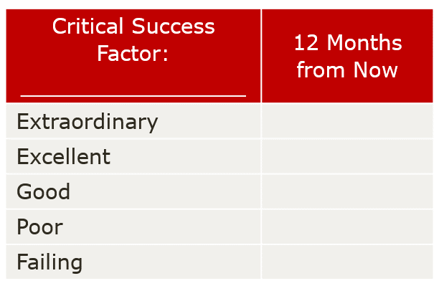
Never once did someone say to you that the person should be hired because: 12 months from now, they will be performing solidly in the middle of the pack. That wasn’t the intention, but it happens, alot.

The first step is to assess the current state of your sales team. If your numbers are like most, we get the chance to look at, then your sales team adheres to the 80/20 rule so you must get your arms around your numbers and figure this out for your company.  Once you have that data, ask yourself these questions:

  • If this is true, then why do I have the other 80% of my sales team?
  • Why is 80% of my team only generating 20% of my revenue?
  • What are they doing or not doing that is getting that result? 
  • What is my sales management environment/sales manager doing or not doing that is contributing to this outcome? 
  • How long has it been this way and why?
  • If this is true, then what should we be doing to correct the problem? 
  • Is it a goal problem? 
  • Is it a hiring problem? 
  • Is it an on-boarding, training, development problem? 
  • Do we have a process in place to help people succeed at the level we thought they would when we hired them?
  • Is this a have-to-fix problem?

Once you get your arms around the data, you will gain some business intelligence and insight as to where the problems are and why they exist. Failing to do this data analysis is akin to trying to diagnose a medical problem without going through diagnostics on the systems responsible for good health!  As you attack the answer to these questions for your organization, we challenge you to take action. You don’t have to accept the status quo. The Pareto Principle does not have to thrive at your organization.


Topics: Sales Training, motivating sales people, sales training tips

Sales Data Insights: Understanding Pull-Through Rate

Posted by Mark Trinkle on Fri, Jun 21, 2024

In our business, one of the greatest sales challenges that most companies face is how to properly gain insight from the data. Some companies chase a bunch of data without any regard for the story that the data tells. Others struggle when they launch sales coaching without any data at all.

One “must-have” sales data insight that all companies should understand is the “pull-through rate.”

Blog

One of my most treasured memories of my younger days was buying and trading baseball cards. Perhaps I am being a bit too nostalgic, but those days were good days, and growing up in Cincinnati during the 1970’s I was a huge fan of the Cincinnati Reds and the Big Red Machine.

I particularly remember studying the back of each baseball card because it told the story of each player. And I can still recall the quote “everybody plays to the back of their baseball card” which is a reminder that year over year statistics can be used to forecast future performance.

In our business, one of the greatest sales challenges that most companies face is how to properly gain insight from sales data. Some companies just chase a bunch of data without any regard for the story that the data tells. Other companies struggle when they launch sales coaching without any data at all which means they are simply guessing on both whether their people can improve and what it will take to cause that improvement.

Pull-Through Rate

All of that leads us to what we call the “pull-through rate.” Let’s start with not getting this confused with your hit ratio or close ratio. Both a hit ratio or a close ratio are computed in the same way by dividing the number of wins by the number of presentations or pitches. This sales data insight means a company that delivers 100 presentations and wins 30 new clients has a hit ratio of 30%.

What is Pull-Through Rate?

A pull-through rate is a different sales data insight altogether. It is calculated by comparing the relationship between first-time or initial sales calls and the number of wins. For example, a salesperson who has 200 first-time sales appointments and who winds up with 30 new clients has a pull-through rate of 15%. For years Anthony Cole Training Group has taught that most prospects are not qualified to do business with you and the numbers across the country support that conclusion. In fact, our own pull-through analysis supports that conclusion as our pull-through rate runs around 20%. Nearly 80% of all the firms we have initial conversations with never become a client of our firm.

Pull-Through Rate Example

Finally, one of the most interesting parts of the pull-through sales data insight is that it allows your sales team to “dollarize” each sales call. For example, if your average sale is $50,000…and your pull-through rate is 15% then every time your team goes on that first initial call, they are in theory making $7,500 every single time they run a sales call.

Conclusion

I still have my baseball cards (at least the ones my mom did not throw away). And the back of each card still has the statistics that tell a story. What does the back of your salesperson’s card look like? Do you like the story it is telling you?


Can we help you find the right  approach for your company?

Topics: Sales Training, motivating sales people, sales training tips


    textunder

    Subscribe Here


    Most Read


    Follow #ACTG


    About our Blog

    Anthony Cole Training Group has been working with financial firms for close to 30 years helping them become more effective in their markets and closing their sales opportunity gap.  ACTG has mastered the art of using science-based data and finely honed coaching strategies to help build effective sales teams.  Don’t miss our weekly sales management blog insights from our team of expert contributors.


    Recent Blogs