ACTG Sales Management Blog

Sales & Sales Management Expertise Blog  

5 Direct Sales Activities that Lead to Sales Success? An Update

Posted by Tony Cole on Fri, Jul 21, 2017

5 Keys to Sales Success


I originally posted this article in July of 2011.  Much has happened in the sales world in just six years.  For some reason, the original post is one of our most viewed articles.  I believe that is a result of a couple of things:

WHY THIS CONTENT IS STILL RELEVANT

  • In many cases, the fundamentals of generating sales is the same.  As my good friend, Tony Neuman, from AAA Insurance pointed out - activity leads to opportunities which lead to success.
  • Salespeople still want to know how to improve. Regardless of the technology and the sales enablement tools, salespeople recognize that, even today, it is still a people business.  With ALL of our clients, the business still depends on people buying from people.
  • The need/presssure to perform continues to mount.  Not just because of the pressure on companies to perform, but the pressure on families to meet their own financial goals, objectives and basic requirements.

With that in mind, I have taken a few minutes to revisit the original post and update some of the content so that it is relevant in today's sales climate.

Original 5 Keys article (Revised with notations)


THE 5 "GREEN" SALES ACTIVITIES FOR SUCCESS

Today, I'll focus on this: Identifying the activities that you MUST execute on a consistent basis to be successful. 

These activities MUST primarily be SALES activities or what I call GREEN activities.  GREEN means GO, which stands for "GO to the BANK".

Green activities would include and pretty much be limited to:

  1. Activities that lead to getting names - networking, speaking engagements, sponsored seminars, meeting with centers of influence and/or asking for introductions. Surprising as it might be, nothing is changed here.  As a matter of fact, the first thing on the list is still close to the top of the list in terms of ROTI (Return on Time Invested) View this YouTube Video with Seth Godin.  The only difference is you need to add  "social" to the networking. There is no doubt that today's sales professional must be extremely well-connected via the social media if they are going to be found and found to be relevant.  
  2. An outreach to assess interest or need - This step used to be focused on qualifying the prospect.  We still believe that, early in the conversation, you need to have discussions about what their needs are, what the investment perameters are and how will they go about making a decision. But, recently, I read Mark Roberge's book - The Sales Accelleration Formula. In that book, he has many great ideas and methodologies; but one that I believe is KEY to your success is understanding where the buyer (what he calls a persona) is in their buying journey.
  3. Conversations and meetings to uncover the buyers process - Another significant change in the process - Your first step now is really to help potential buyers uncover if, in fact, they have a problem that needs to be addressed. So often, prospects know they have a problem based on symptoms they see, hear or feel, but they need to know the severity of the problem.  In most cases, potential buyers don't know what they don't know. Today's salesperson has to be masterful at asking the right questions the right way in order to help them identify the problem(s). You should not discuss solutions until they have thoroughly clarified the issues. Pitching capabilities early in the buyer's journey is a big mistake.
  4. Gathering additional information for your presentation step - Once you have provided some guidance to the prospect and, yes, they have decided that they have a problem that needs to be fixed, your job is to now provide them with options, free trials, demos and comparision presentations. These resources help the buyer in their journey towards making a decision.
  5. Presentation of your product/suite of solutions - Not much has changed here except the belief that, by the time you get here, you should have prepared your prospect to make a decision. As we have always taught, get a decision one way or another - yes or no!  Be okay with a no.

Selling is hard; it always has been and probably will always will be.  If you haven't already done, so download our ebook, "Why is Selling So #%&@ Hard?"  It will provide you with keen insights into the root causes and challenges of selling and help you develop long-term strategies to keep selling from being so darn hard.

DOWNLOAD our FREE eBOOK -   Why is Selling So #%&@ Hard?

Topics: keys to sales success, sales activities for success, green sales activities, things to do for sales success

How Do I Make Sure I Hire Someone Who Has Excellent Sales Skills?

Posted by Tony Cole on Tue, Jul 18, 2017

8 Reasons Why Hiring Elite Salespeople is Difficult:

  1. It's hard to find qualified candidates - only 7% of salespeople fall into the “elite” category (What elite sales people do differently)
  2. You have other responsibilities
  3. If things are “okay”, you don’t look for someone… until you have an opening and then you feel desperate to fill the seat
  4. Elite sales professionals – those with excellent sales skills – often are not actively looking for new jobs
  5. The resumes all look the same
  6. Personality and behavioral tests tell you how they like to be managed but don’t have any predictive validity for sales success
  7. Your HR (talent-acquisition partners) really don’t understand why hiring salespeople is different than hiring anyone else for a company
  8. It’s not your go-to skill set.

how to hire top salespeople

Step 1: Make sure you know and identify exactly what sales skills make your elite salespeople ELITE salespeople. 

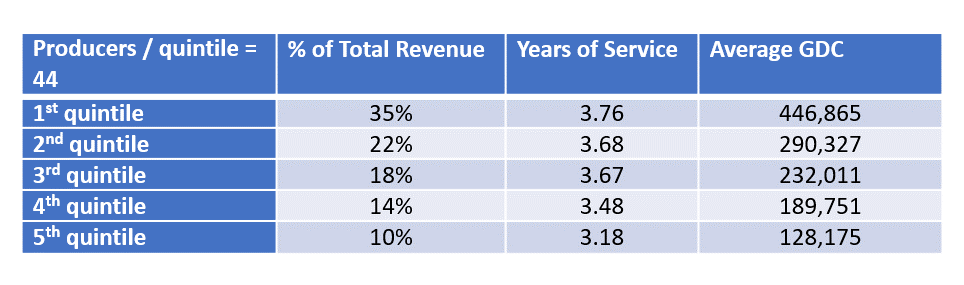
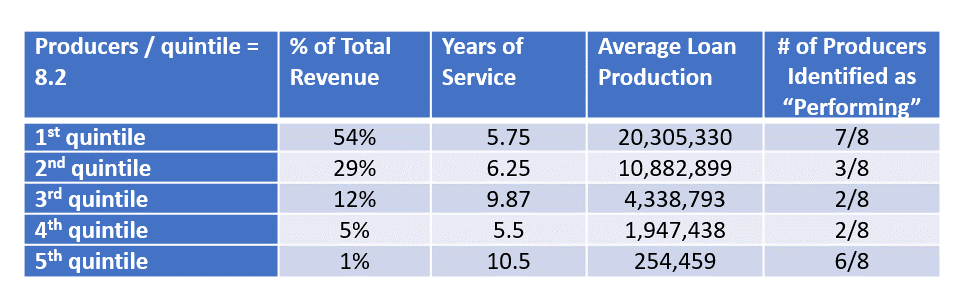
We just completed a Sales Effectiveness and Improvement Analysis (SEIA) for the private banking segment of a regional bank.  This is what we know separates the top performers from the bottom performers:

Distinguishing skills and sales traits of top performers

  • Hunter
  • Possess over 50% of required sales skills
  • Strong at getting introductions
  • Get past gate keepers
  • Maintain a full pipeline (convert activity – prospecting – into opportunities)
  • Reach decision makers
  • Develop trust and confidence early in the relationship
  • Present product proposal at the appropriate time
  • Keep prospects from buying too early in the process
  • Not reliant on ‘”educating” the prospect or presenting to get the business
  • Love competing against others

Request a Free Demo or Sales Assessment Sample

We evaluate over 125 different data points when using a pre-hire sales skills inventory assessment and what we have found over the years is that there are usually between 20 and 30 variables that separate the best from the rest. THIS is the first step in making sure you are interviewing candidates with sales skills needed to succeed in your organization.


Step 2:  Interview for fundamental skills

Once you’ve received an application or some notice of interest in your available career opportunity, you send the candidate a notice letting them know you’ve received their information and that, in order to move forward in the process, two steps will take place:

  1. They will be asked to complete the online sales skills inventory assessment.
  2. If the assessment findings indicate that their sales skills match what you are looking for, then a 10-minute phone interview will take place.


Why The Phone Interview

At Hire Better Sales People (White Paper), this is the beginning of Step #2.  In the 23 years of our sales consulting practice, I cannot recall a single client where phone skills were NOT critical to the success of the salespeople being hired.  With that in mind, it stands to reason that the first thing you should look/screen for are their phone skills.  Most of the time, our clients outsource that to us. The reasons for that are:

  • Consistency
  • Lack of a bias towards any candidate

In the phone interview, you want to make sure that this person can conduct themselves on the phone like you would expect them to when talking to prospects.  In order to do that, you must create a similar environment that the candidate will have to react to: 

  • No bonding and rapport done by the interviewer
  • Create time pressure so that they have to react and attempt to take control of the phone call
  • Challenge them on their answers to questions (certainly, prospects will ask them questions on the phone – wouldn’t you want to know how well they react as well as what they say?)
  • Let them know that you will be making a decision about who will go on to the interview step and see if the candidate attempts to “close” for that opportunity. If they fail to close for the next step, they will probably fail to close a prospect for an appointment.


Step #3 – Use the data from the resume, the application and the pre-hire skills assessment.

Top salespeople hunt for opportunities, reach decision makers, quickly establish confidence and trust, love to compete against others, have strong desire and commitment to success in selling, take responsibility for outcomes, are highly motivated for success in sales and have a high figure-it-out factor.  Here’s some ideas for assessing these traits in potential candidates:

  • Make the candidate bring their calendar for the next 30 days and make them count the number of new business appointments they have scheduled
  • Make them establish the bonding and rapport. Tell them to take a seat, tell them that you’ve scheduled 60 minutes, but it may only take 30, and see what they do next.  If bonding, rapport, confidence and trust are important, see what your candidates do to make that happen.
  • Ask about competitions they have won
  • Tell them to describe in detail situations where they did everything possible to succeed at something especially when they had to change, overcome a difficult challenge and they overcame despite terrific odds.
  • Ask them to tell you about a situation when they faced failure at accomplishing something personally or professionally. (Hint – they need to say “I failed…”)
  • Give them a test of any kind and see how long it takes for them to figure it out or…
  • Create a role-play scenario out of thin air, give them a couple of minutes to figure out how they want to go about the role -play and then role play.


There is certainly no guarantee for any new hire.  You still have to consider cultural and team fit.  Is there synergy between the new hire and the hiring manager?  How about their technical and professional credentials?  We’re just talking about sales skills here, but, to be clear, it’s rare that someone fails to succeed in selling because they lacked the required technical or professional expertise for the field they were in.  Nope… people normally fail because they fail to generate sales!

Be a Rock Among Pillows

Posted by Alex Cole on Fri, Jul 14, 2017

My pup, Rocky, loves to lay on top of pillows. ALL pillows. He doesn’t care if they are round, square, flat, cushy, or even sewn on and attached to the back of the couch- he will find a way to lay on them. And though it irritates me to no end to walk into a room to find all of my decorative pillows haphazardly thrown around, I must appreciate Rocky’s determination. He will do whatever he can to make sure he is on top. He fights, and sometimes literally claws, his way to the peak of that pillow mountain. He epitomizes the great sales candidates you should be looking for- except maybe the dog part.  

Rocky Pillows.png

Great sales candidateswill think the same way Rocky does- they have to be on top. They will do whatever it takes to make sure that they are successful. They will find ways to differentiate themselves amongst their peers. The hardest part, however, is being able to spot those great salespeople without wasting a lot of your, or their, time.

At Hire Better Salespeople, we believe that you should be able to learn everything you need to know within the first 5 minutes of any interview. If you are asking the right questions, you should know how well this person handles themselves on the phone, if they have the strong will and determination you need and if they are a fit for your opportunity. The point of the first interview is not to review a resume or sell them on the details of the position. Instead, it is to drill down on their capability of doing the job you need them to do. If your organization needs a hunter, you must say, “We need someone that is going to hunt and close new business. How do we know this is you?” A great sales candidate will give you a concise answer with facts to support their position. They won’t be flustered by the direct questioning and will have the ability to answer your questions with little hesitation or "word fluff”. You should only have to ask 3 or 4 questions to determine if individuals should move forward in the interviewing process.

Even more importantly, a great salesperson will attempt to close for the next step at the end of the call. Any candidate who asks robust follow-up questions, wants specific details pertaining to the next step or directly states why they are the right fit should immediately advance to the next stage. If a sales candidate doesn’t attempt to close you at the end of the interview, it is very unlikely they will do so with a prospect.

The number one question I ask myself after any interview is this: “Would I like to compete with them in the marketplace?” If the answer is no, strongly consider this individual for a position within your organization. What if they don’t have the specific experience you are looking for? Don’t worry! You can train someone on the technical parts of being a banker or insurance rep, but it’s a lot harder to train them to be a great salesperson. 

So, next time you’re interviewing a sales candidate, remember Rocky and his quest for higher, softer ground and his grit to get there. If you are interested in learning more about how to Hire Better Salespeople, sign up for our free webinar—“Ruff” Realities About Recruiting. During this webinar, you will learn how to hire your next “top dog” using our proven process for searching, evaluating skills using a sales assessment, interviewing, hiring and onboarding new hires.

Webinar Details

Thursday, July 27th, 12-1 pm EST

REGISTER NOW

REGISTER HERE for "Ruff" Realities Recruiting Webinar


Topics: 5 minute interview, aquire sales candidates

Become a Pipeline Hound!

Posted by Alex Cole on Fri, Jul 07, 2017

How important is it for your salespeople to have a pipeline of prospects? Probably pretty important. How crucial is it that your salespeople continue to feed into that pipeline? Just as crucial! We all know that, in order for your organization to succeed, it is vital that your salespeople build, grow and maintain a solid pipeline. But what happens if one of those great salespeople leaves? Do you have someone on the sidelines ready to take that spot?

The first thing that we teach our Hire Better Salespeople (HBSP) clients is that it is just as imperative for you to have a pipeline of potential candidates as it is for your salespeople to have a pipeline of prospects. Most companies find themselves reacting to the loss of an employee as opposed to being proactive about it. When companies don’t proactively recruit new sales talent, they typically find themselves with a vacancy for a much longer time. For example, last year, HBSP partnered with a financial institution out of Cheyenne, WY and it took over 8 months to find a qualified individual partly due to the absence of a sales candidate pipeline. When this happens, you now have the daunting task, and added pressure, of finding a replacement... and quickly! But what happens when we rush things? Usually a mistake is made, right? Your hiring decisions and processes are not something to be rushed or else large, costly mistakes will occur. It doesn’t matter if things are going great or going terribly- a candidate pipeline has to exist.

Yoshi Window-1.jpg

So, what is the best way to build a sales candidate pipeline? Be a candidate watch dog! Start with the people you know. Typically, great people know other great people and are happy to refer them. Ask your family, friends and employees if they know of anyone who may be a fit for your organization. Networking events are also a great place to receive names and meet potential sales candidates. Once you gain a few leads, reach out and see if they would be interested in getting together. In no way are these conversations interviews- they shouldn’t be! Interviews are for applicants who are actively looking when you have an active opening. At this point, you are just trying to gauge interest and add potential sales candidates to your network.

Creating a candidate pipeline won’t solve all your recruiting troubles, but it’s the first place to start. If you are interested in learning more about how to Hire Better Salespeople, sign up for our free webinar—Ruff Realities About Recruiting. During this webinar, you will learn how to hire your next “top dog” using our proven process for searching, evaluating skills using a sales assessment, interviewing, hiring and onboarding new hires.

Webinar Details:

Thursday, July 27th at 12 PM EST

REGISTER HERE for "Ruff" Realities Recruiting Webinar

Topics: increase pipeline, sales candidates, hire better salespeople, recruiting sales talent

Calling Audibles

Posted by Mark Trinkle on Wed, Jun 28, 2017

football-scrimmage.jpg

A guest post by Mark Trinkle, President, Anthony Cole Training Group

An audible is a change in the offensive play called by the quarterback at the line of scrimmage.  Today, I thought of that in Chicago as my Uber driver made several deviations from her GPS directions in transporting me from Midway Airport into downtown.

As I rode along with the windows down on a beautiful and sunny day in the Windy City, my thoughts turned from sightseeing to salespeople…specifically, the need for salespeople to make changes on the fly, whether that be during the initial phone call, the first meeting or even at the time they present their solutions.

Anyone and everyone who has had any exposure to Anthony Cole Training Group knows we are completely sold on the importance of process.  We have table-pounding conviction (a tip of the hat to my good friend, Mike Iverson in Atlanta) around how important it is for a business driven around and by sales to have certain key processes in place in term of their sales infrastructure.  And, of course, we believe that sales training creates the most return on a client’s investment when the salespeople and sales managers are following a sales process where opportunities are moving through the funnel in a stage-based and milestone-centric manner.  We believe that firms who don’t have a consistent sales process (everyone following the same steps and using the same terms to describe stages in the sales process) but who implement such a process can often see a 15% to 20% increase in new business sales.

But, here is something worth remembering – life is complicated.  Ferris Bueller (can’t come to Chicago and not think of him) told us to slow down or we might miss something.  And the same is true with selling.  Sometimes you just need to slow down and do something unconventional.  Sometimes you need to do something that is even contrary to what your training has taught you to do.  Sometimes you just need to call an audible.

Let’s be clear – usually your training is going to be correct.  But, sometimes, you will need to remember that selling is both science and art…and the art part means you might need to listen to your heart and occasionally let that heart override your mind.  Of course, the best in the business know when to listen to their head and when to listen to their heart.  And if they get it wrong every so often, so what?  They get back up and keep going.

So, listen to your heart.  Sometimes you will need to call an audible.  Like now…forget the salad; there is a deep-dish pizza out there calling my name.

 DOWNLOAD FREE eBOOK -  Why is Qualifying So #%&@ Hard?

Topics: Selling Attitude, sales skill, sales growth and inspiration, calling an audible


    textunder

    Subscribe Here


    Most Read


    Follow #ACTG


    About our Blog

    Anthony Cole Training Group has been working with financial firms for close to 30 years helping them become more effective in their markets and closing their sales opportunity gap.  ACTG has mastered the art of using science-based data and finely honed coaching strategies to help build effective sales teams.  Don’t miss our weekly sales management blog insights from our team of expert contributors.


    Recent Blogs