ACTG Sales Management Blog

Sales & Sales Management Expertise Blog  

Tony Cole

Recent Posts

Why Do Sales People Leave Companies? - Management

Posted by Tony Cole on Wed, Mar 01, 2017

MANAGEMENT RESPONSIBLE FOR A $450 BILLION PROBLEM

According to the article, People Leave Managers, Not Companies by Victor Lipman, the research is unanimous in the premise that managers are directly responsible for the productivity of the people they manage.

Gallup data shows 30% of employees “engaged.” Towers Watson data shows 35% “highly engaged.” Dale Carnegie data shows 29% “fully engaged.” And these aren’t small studies; the Gallup survey includes more than 350,000 respondents and the Towers Watson survey includes more than 32,000. Gallup goes on to estimate an annual cost in lost U.S. productivity of more than $450 billion. This is a staggering figure. Even if it’s imprecise, it gives a sense of the magnitude of the problem.”

INTERESTED IS NOT ENGAGED

My mandolin teacher is a better player than he is a teacher. I’ve not had music lessons before so I may not be an accurate judge of what makes a good music teacher, but I have been taught and coached before.  The best ones have always engaged me by first understanding what I wanted to accomplish, getting a feel for my current state (skill level) and assessing my commitment to being better.  I’ve not had this discussion with John at all. The starting point in my lessons was him jumping in and telling me about keys, chords, progressions and scales.  I might as well take Greek lessons.  I was interested… but not engaged.

lessons-playing.jpg

“LOSING THE SCHOLARSHIP”

I will not seek out another instructor… nor will I tell him he’s ineffective as a teacher because he spends his time showing off stuff that will take me years to learn while I pick my way through the Godfather Theme for the 1000th time.  Why?  Because I don’t have time to seek out someone else, I am learning something and, most importantly, I'm not going to “lose my scholarship” if I don’t get Country Boy by John Denver.

What does this have to do with managers, specifically sales managers? Everything.

I will admit that I just signed up for the music instructor that they had available.

  • Kind of like a salesperson taking a job and really not knowing the qualifications of the manager that will be leading them to success.

I will admit that I’m approaching music as a pastime and not like my life or my retirement plans depend on my music skills.

  • Kind of like a salesperson taking a new sales role and really not understanding what the expectations are for success in the first 90 days
  • Kind of like salespeople already on the staff that are “at leasters” and aren’t worried about their position because, as long as there are people below them on the stack ranking, they won’t “lose their scholarship” (job).

TWO POSSIBILITIES… ONE EVENTUAL OUTCOME

Eventually, one of two things happen:

  1. The company catches up with the WITALAIITUs and the salespeople get put on PIPs. They respond well enough to keep their job or they immediately start looking for a new one.
  2. Or they get fed up with the hassles of performing better without any significant support, training or coaching to help them get better and so they leave.

THE PROBLEM PERSISTS BECAUSE BUSINESS ALLOWS IT

At the end of the day, the turnover ratios in the company continue to put a drain on profitability. HR and hiring managers explain it all away as “the nature of our business”. 

It’s the nature of the business only because business allows it to be so. They allow ineffective recruiting, poor on-boarding, sloppy or missing solid performance management and last, but not least, the continuation of ineffective of coaching.

3 SOLUTIONS TO ADDRESS THE PROBLEM NOW

What to do?  These three things will get you started:

  1. Start with Better Ingredients - Like the cooking analogies I’ve used before, start with fresh ingredients. In this case, I mean start with better people.  I don’t mean people that are just better from a moral or ethical perspective, although that's normally pretty important.  In this case, I mean start with people that fit your culture and will do well on the scorecard for success.

Sample Scorecard For Success:

scorecard-2.png

  1. Have a Supportive Sales Managed Environment® - You have to have the structure in place so that the person in charge of running the show won’t have excuses or reasons to fail.  Essentially, you need to have systems in place for:
    1. Performance management
    2. Upgrading the sales force
    3. Motivating the sales team
    4. Coaching for success
    5. Recruiting top talent
  2. Management with a Coaching Bias - Phil Jensen spoke of the 3rd factor (as it relates to coaching) several years ago at an Ecsell Institute Sales Management Summit. The concept is simple.  There are two factors that most of us rely on to function and succeed – Nature and Nurture.  Jensen suggest that people also rely on a third factor – in the case of successful managers, they have a “coaching bias”. That is their 3rd factor.  They care more about developing people than they do anything else.  They experience success as a result of the success of the people they are coaching.

Additional Resources:

No More Hiring Mistakes. Guaranteed! – http://www.hirebettersalespeople.com

Identify Your Systems and Processes – Sales Effectiveness and Impact Analysis Sample

Topics: sales talent acquisition, sales performance coaching, responsibilities of sales manager

Intentional Sales Coaching – You Can’t Coach "Tall"

Posted by Tony Cole on Wed, Feb 22, 2017

YOUR BIGGEST UNDETECTED CHALLENGE

One of the biggest challenges, mostly an undetected challenge, is providing coaching that is customized and intentional to the individual need.  I say “undetected” because most, if not all, of the time coaching is done based on symptoms:

symptom-chart1.png

I could add another 10 symptoms to the list, but I’m sure this has already caused you some nausea.  It doesn’t matter if you are a sales manager attempting to do the coaching or the sales person on the receiving end of the coaching, you probably feel the same way.  I’m tired of sales training, I’m tired of going to the same classes over and over again, I’m tired of telling my people they have to do a better job at cross-selling, getting introductions, networking and asking for the business.

In the end, everyone is sick and tired because, after all the training time, after all the role-playing and after all the investment of money, you look at the results and not a lot has changed.  How come? Well, because you can’t coach TALL.

YOU CAN’T COACH “TALL”

My daughter (recently engaged - thank you) played basketball in 7th grade.  She then tried volleyball but found her love of performing in front of others, not on the fields or courts of athletics, but on the stage of music and theatre. 

I was watching her basketball practice one day and was thinking she had a chance to be a player on the high school team, but she would need a lot of work on the fundamentals: handling the ball, keeping the ball up when rebounding and pivoting while in the low post.  After practice, I went to the coach and asked him what he thought. 

Like a lot of coaches who have to address parents when they ask about their child’s skill and potential, he couched his remarks carefully.  He stated what I had been thinking about her skills and fundamentals and then he said that she would still probably be a starter.  Somewhat surprised, I asked, “How come?”  He said, “You can’t teach tall.”

You see, Alex in 7th grade was already almost 6’ tall.  She could out rebound people because they simply couldn’t reach the balls that she could reach.  She was good enough on defense and blocked out well so she had some things going for her that helped her overcome any weaknesses she had that might have kept a shorter player from being a starter. (Watch this exception to the rule.)  Besides, she had dad, a former coach, to keep her working hard and disciplined. 

Alex-tall.png

 **Note:  Alex’s height created an interesting sight on the stage when she played the queen in Cinderella.  With her hair pushed up on her head and a crown she was at least 6’4”.  The leading man… about 5’4”.  It was funny.

INTENTIONAL COACHING IS ALL ABOUT THE ROOT

The thing about intentional coaching is that, in order to get changes in behaviors and improvement in skills, you have to understand the root cause of the problem:

symptom-chart2.png

The coaching required to address the symptoms is not teaching them a new technique or process.  It is not enrolling them in a wealth certification program.  It is not having them take a time management course.  The coaching required has to address the root issue.  For example...

Problem: I don’t have time to prospect. I have too much account management work to do.

Solution(s):  Assign account managers (and they still won’t prospect, they’ll just find another excuse) or enroll them in a time management class.

ADDRESSING THE ROOT CAUSE IS REALLY THIS SIMPLE

SO…that isn’t the answer for dealing with excuses (audio). 

The solution is to ask them, “If I didn't let you use that as an excuse, what would you be doing differently?”

This addresses the root issue.  I can guess that you’re thinking that it cannot be that simple. I assure you can call anyone of the hundreds of salespeople we’ve coached or salespeople we’ve trained and they will ALL tell you that IT makes a difference.  It changes things because you’re now dealing with the correct end of the problem!

KNOW ABOUT ROOT ISSUES WHEN HIRING

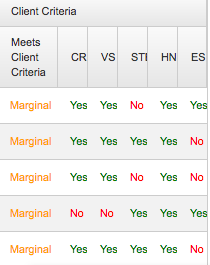
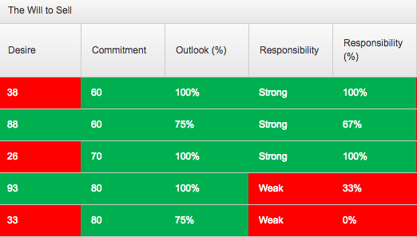
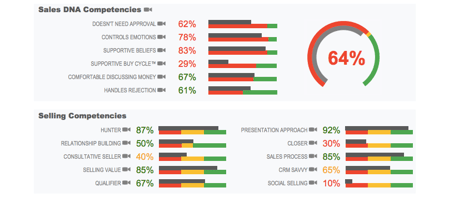
Finally, think about the candidates that you are hiring. There are things they have to come to the table with that you cannot coach or you don't have time to coach. Take a look at this screen shot of the sample pre-hire assessment we use to guarantee no more hiring mistakes:

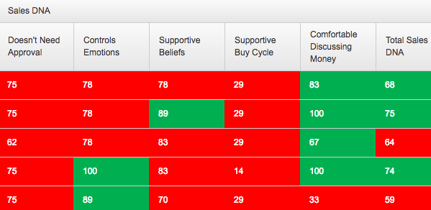
omg-pic-2.pngWouldn’t you want to know in advance that they had desire and commitment to be successful in SELLING?  How helpful would it be to know in advance that they will struggle with rejections but they will be great talking about money?  Take a look at the next shot:omg-pic-3.png

Even though there are some obvious areas of weakness, this candidate is recommended for hire. (When a hire is made based on a "recommended for hire" finding, like this candidate, 92% of the time that candidate will be a successful sales person.) The benefit of having this information is that, if you were to hire this individual, you would know the extent of your "project" and exactly what you would need to do to help them be successful in your organization.

However, having said that, there are still factors that need to be considered. Look at the work that has to be done... AND notice this: the findins say they are trainable but are not considered coachable.  Do you want to take that on? Do you have the bandwidth to take that on?  If not, then this is a hire that shouldn’t be made.  Now, consider how many of your people today might look like this and what’s that costing you?

Additional Resources:

Topics: improve sales, sales performance coaching, development of sales, sales recruiitment

Why Prospects are Like Fruit

Posted by Tony Cole on Fri, Feb 17, 2017

Years ago, while attending the Objective Management Group International Sales Conference, Dave Kurlan, president of OMG, talked about how to effectively manage opportunities through the pipeline.  He made the analogy that prospects are like fruit and vegetables in the produce section of your local grocery – they are all perishable.

“In The End, We’re All Just Fruit” – Watch the video!

we-are-fruit.jpg

That phrase has stuck with me all these years, and we continue to reference it when we are presenting our Effective Sales System (this article has 2600 views – it’s worth reading) workshops and when we are working with our new clients for hirebettersalespeople.com. 

NOT EVERYONE HAS THE SAME "SHELF LIFE"

Prospects:  They have a shelf life just like fruit: some of them a little longer than others.  Bananas – not so long, apples and mandarins a little longer, potatoes – not forever, but if they start to sprout, you can at least plant them in the ground and get more potatoes.  The bottom line is that none of them last forever.  You need to either eat them or find a way to preserve them for later.

As you go about looking at the shelves (prospecting in the market) for the produce you need for tonight’s meal or for meals over the next couple of days, you need to be somewhat selective so that the food you select today is fresh enough for cooking and or consuming over a short period of time.  I can buy a bag of potatoes and probably use them in two weeks.  Buy a bunch of bananas and we’ll need to eat them soon or else next week we will have to turn them into banana bread.

WHEN IT'S TIME, IT'S TIME

The same holds true for prospects relative to their buy cycle.  They are not in that cycle forever. Depending on what services you sell, they could be off the shelf in a week.  They may be in the looking, considering, “thinking about” cycle for a while, but once they decide to buy – it’s time to buy!

Years ago, I was in the market for a new vehicle.  The Chevy Avalanche had been out for a couple of years and I knew, when the day came, that was going to be my purchase. There is a Chevy dealership just down the road from my house in Montgomery, Ohio where I had purchased vehicles in the past from the manager Bill Wentzel.  When the day came – my lease was expiring – I went to Bill, told him I had a check in my pocket and would like to test drive the red Avalanche. I asked him if he would get me a salesperson who wouldn’t get in the way and just let me buy.

Two hours later – that’s because the paper work takes that long- I drove off of the lot in my new shiny red Avalanche.

***Note to bankers, advisors and insurance sales people***  
Your prospects are ALWAYS in the market.  EVERYONE you sell to is using, consuming and/or shopping for the services you offer.  Your timing has to be good, but it doesn’t have to be great. What has to be GREAT is your constant contact with them so that, when they are ready, you are top of mind.


DON'T LET PROSPECTS PERISH

Here is my real point.  When going out into the market, you can find yourself wasting your time with produce/prospects that aren’t quite ready or are already past their prime time for consumption:

  • Potatoes too green
  • Bananas too green
  • Tomatoes too yellow
  • Peaches too mushy
  • Stickers on meat packages that say “reduced”
  • Just renewed my insurance
  • Our lease expires in 11 months
  • We have to wait until this election is over

If you want to close more business, more quickly at higher margins, then find the highly perishable prospects – work with them on solving their problem. Present a solution to them and get them off of the shelf.  Do not neglect the potatoes, bananas, tomatoes or green beans; continue to check on them, plant them in your database (your CRM) and, when the time comes to make potato salad, they will be ready.

Additional Resources:

How Effective is Your Sales Process?

Do You Need Better “Shoppers” (sales people) Who Won’t Perish? Sales Mistake Calculator

How to Determine a Qualified Prospect – Post-Call Checklist/Scorecard

Topics: Pipeline management, sales prospecting, closing sales

Why Sales Coaching is to Growing Like Low & Slow is to Tasty BBQ

Posted by Tony Cole on Wed, Feb 15, 2017

It’s this simple:  If you want great barbeque ribs, brisket or chicken, the key is low temperature and slow cooking. Having said that, if you want maximum flavor and tenderness, make sure you sear or char the meat first, then go low and slow.  This is an undeniable truth.  Just read the Science of Cooking and discover all the neat things you can do to improve the outcome of any meal.

EXPERIENCE DOESN'T GUARANTEE FUTURE SUCCESS

20 years in sales does not guarantee future success.  Just ask anyone that has lost a sale at any time in their career.  Something always happens just a little bit differently.  If there isn’t an adjustment, a lesson or some learning as a result, then the salesperson is prone to repeating the sames mistakes or errors over and over again.

When you effectively coach your people, they will get better.  When they get better, you will close more business, more quickly at higher margins.  This is undeniable as well.  Just look at the information provided by The Sales Management Association.  **FYI - it’s also undeniable that a lack of coaching has a negative impact on sales success and talent development!

(Bob Rotella – coach to PGA Tour Players – Author – How Champions Think)

golf-coach.jpg

THERE IS ALWAYS TIME TO COACH

In our Sales Management Certification Program, we discuss 5 Keys to Coaching for Success in our coaching module. These 5 keys cover what to do and how to do it when you are face-to-face with your salespeople. Many managers, before going through our certification, complain/tell me/make excuses that there isn’t enough time to effectively coach their people.  I don’t buy it. There are several opportunities for coaching without adding to an already busy schedule:

  1. Sales meetings
    1. Segment on sales training
    2. Role-playing phone calls to get appointments
    3. Role-playing conversations to get appointments with internal partners
    4. Role-play how to position financial planning
    5. Overcoming objections
    6. Appropriately dealing with questions, and stalls.
  2. Pre–call strategy sessions
  3. Post-call debriefing sessions
  4. 1-on-1 intentional coaching sessions
  5. Ad-hoc moments when they ask you if you have a minute
  6. Every time they give you an excuse for lack of effort or execution

IN-THE-MOMENT COACHING VS. COACHING FOR SUCCESS

Coaching does take place today, but most of it is in the moment. Kind of like when a coach calls a time out in a game. The team is gathered around the coach and a strategy is developed to take advantage of the “in the moment” opportunity. Normally, that’s the type of coaching that takes place in sales – in the moment.  That type of coaching helps close a sale, get an appointment, and/or move an opportunity through the pipeline, but it does nothing to change behavior or improve skills!

Do you find yourself or your sales managers constantly covering the same ground to close deals, improve effort or refine execution?  Are opportunities getting stuck in the pipeline in the same spot for the same reasons over and over?  When you look at the performance (effectiveness and productivity, not just the results), do you see actual improvement in sales ratios like average size sale, conversion ratios from opportunities to closes and average production for each quintile in the team?

Those are the types of metrics that determine if your coaching is effective!  Failure to collect that data leads to failure of the effectiveness of your sales manager and your sales team.  Collecting the data and then doing nothing about it leads to lackluster enthusiasm for entering data, thus limiting the integrity of your forecasting.

THE 5 KEYS FOR COACHING SUCCESS

So, let’s assume for a second that 1) you are collecting data and  2) you are creating opportunities to coach people.  We can now discuss The 5 Keys for Coaching for Success.

  1. Gain insight from data points: Your data points have to include data (numbers representing leading and lagging indicators), observational opportunities via joint calls, and observations made during role plays in meetings.

    The data points you have should not be a secret to your people. Share with them what you know and what you’ve observed.  Prior to meeting with them, call them to set up the coaching meeting. Tell them that the data you have indicates there might be some problems with them hitting their established extraordinary goal.  (Remember the extraordinary goal discussion?) Then tell them that you want to meet with them during your established coaching hours. Set the appointment.
  1. Provide feedback: Now that you both have the date, you don’t have to ask the worse possible question in your meeting, “So, Joe, what’s going on?”  Instead, you acknowledge that you’ve looked at the numbers and they’ve looked at the numbers and then you ask a question about the problem that you see.

    Let’s pretend that you see a choke point where his conversion of conversations isn’t leading to the assumed number of appointments. All the other assumptions look good, but - because the conversion is off - the number of appointments isn’t meeting the goal.  Without this information, the only coaching you can do is to tell Joe that he needs to see more people. But, with all the data, you see that the effort is there – the dials and discussions – but that effort isn’t leading to appointments.

    Instead of pointing that out, you ask Joe what he sees when he looks at the conversation ratio compared to the model in the success formula.  Assuming Joe sees the same thing as you, you are now in a position to ask further questions.  The key here is that both parties must agree as to what the problem is.

  2. Demonstrate what you expect to be done: In this case, you would listen to Joe’s approach to converting conversations to appointments.  You would identify areas where he might need to change or improve his approach and you demonstrate what that would look/sound like.

  3. Role–play: Now that you’ve demonstrated what you expect, you role-play various situations with Joe giving him several different responses.

  1. Action step: It is critical that every coaching session ends with an action step.  An example of that would be to agree to a number of calls that Joe is going to make over a short period of time (i.e. by the end of the day or week) and then instruct him to report back to you (on a specific day and time) the outcome of his effort.

(Click here for 9 critical coaching skills)

STOP WASTING YOUR MONEY ON SALES TRAINING

Understand that this might be an ongoing process for Joe, and you may have to take a more disciplined approach to his coaching and execution of the skills he is struggling with.  At the end of the day, the key is to recognize that improvement is vital for sales growth.  You cannot expect to grow sales without improving effort and/or execution. If you want to improve sales, invest your money in developing your sales managers and stop wasting money on sales training until your managers can and will coach.

Additional Resources:

Demo online Sales Learning Module

Sales Managed Environment® Certification Module – Free Document

Topics: Sales Tracking, Sales Coaching, sales performance coaching, sales productivity

Growing a Successful Sales Team – What Are Your Cultural Requirements?

Posted by Tony Cole on Fri, Feb 10, 2017

When a new president of a company takes over a company or when a new sales manager takes over a sales team, you can imagine what happens, right? There were already people there as a result of the previous administration(s).  Those people, inherited by the new leader, chose to stay based on the previous leadership and characteristics of that leadership. (HBR book on leadership).

2 QUESTIONS TO ASK WHEN “INHERITING” A SALES TEAM

Now, what happens when new leadership “inherits” and takes over a previously established sales team? Chaos, push back, dissension and political jockeying - sound familiar? I imagine it does, but that isn’t the point I want to make now. The point I wasnt to address here is that, when you find yourself in this situation, there are two questions that need to be immediately asked and answered. 

  1. What happens to productivity, growth and stability when there is a lack of teamwork?
  2. How do you fix it?


IGNORING EXECUTIVE ORDERS… WHAT?!?! 

Every POTUS comes into the office hoping to make a significant positive contribution to our country and citizenry.  No one takes the oath of office with the intent of doing harm or “screwing it up”.  Unfortunately, that doesn’t mean it doesn't happen and no President evert goes unscathed or un-criticized by those who didn’t vote for him/her (Hillary would have made that statement end with her!). 

Trump’s Executive Orders to restrict immigration from certain countries and the resulting backlash puzzles me.  Not because of the opposing views on the executive order but because of my lack of understanding of how our federal and state governments work and/or don't work together.  I had no idea that a judge in Washington could weigh in on such a matter as an executive order and declare that the state of Washington could ignore not just this executive order, but any executive order. 

Presidents and number of executive orders in my lifetime:

 exec-orders.png

Since I became an eligible voter, I had not previously heard of any judge at any time weighing in on executive orders.  I admit that I may have missed them. And so, what I’m really admitting to is that I don’t know how the whole thing works.  What I do know is that, for any organization to win more than it loses, it needs people that have a strong sense of teamwork who are willing to sacrifice their own personal agendas for the good of the team.

Teams work or don’t work, win or don't win based on the following:

  • Strategy
  • Effort
  • Execution
  • Performance Management
  • Motivation
  • Coaching
  • Talent Acquisition

 
SUCCESS REQUIRES EVERYONE’S SUPPORT

In order for a team to succeed, the strategy for the company has to be supported by the entire company.  There has to be alignment and support!  The middle manager in Washington cannot decide to not put forth the effort or choose to not execute the strategy simply because they disagree with the strategy.  If that’s the case, then that middle manager can no longer be part of the team.

To avoid this type of problem, the company's hiring strategy has to consider cultural fit.  In the case of government, teams and companies, one of the components of cultural fit to be considered is the Team Player.

THE MOST IMPORTANT QUALITY OF A TEAM PLAYER

A team player is one that sacrifices their personal agenda for the betterment of the team.  They are willing to do everything possible (assuming legal, ethical and moral standards) to assist the team in winning.

Linda and I recently attended the Sycamore Athletic Boosters Hall of Fame Induction dinner.  Our friend, John Traub, was one of the inductees.  John Traub, a former wrestler and current teacher’s aide at Sycamore High School, holds several school records in wrestling, has coached state champions there and was instrumental in establishing the youth wrestling program in our community. 

Also, on the list of inductees, was Bailey Su.

While at Sycamore, Bailey Su played tennis and lacrosse. She went on to college at Northwestern where she played on the 3 time NCAA National Championship team.  She recalled that her coach taught her about teamwork, the value of the team and how you have to sacrifice your own interests for the benefit of the team. She shared a story about a time when she and a team mate decided to donate blood. This left them tired and lethargic for practice. When their coach questioned them about this, he became enraged at their selfishness.

I know this sounds strange and I assure you that everyone in the audience was uncomfortable with the story about the coach, but Bailey insisted that it was a very strong lesson for her. She indicated that she could have accomplished the same thing another way without doing harm to the performance and goals of the team.

SCREEN FOR SKILL AND WILL

Do you have players who think that way… or do you have people on your team who are all about themselves and only think about their own needs?  Do you look for the team mentality when you are interviewing candidates? What else are you looking for to make sure there is a fit?  How well do you screen for those soft, emotional intelligence, cultural characteristics and behaviors that may cause you to think 6 months down the road that this wasn’t a great hire because of fit?

I recently wrote an article about making sure you always assess candidates for “skill and will” before you start the interview process.  That step is just that – a step.  And even that step must be put into perspective.  You need to make sure you have a scorecard that clearly spells out what it takes to be a successful team player IN YOUR ORGANIZATON, not just on how to be a successful sales person.  That scorecard must include “team player”.

Topics: sales force development, sales recruitment, teamwork coaching, sales skill assessment


    textunder

    Subscribe Here


    Most Read


    Follow #ACTG


    About our Blog

    Anthony Cole Training Group has been working with financial firms for close to 30 years helping them become more effective in their markets and closing their sales opportunity gap.  ACTG has mastered the art of using science-based data and finely honed coaching strategies to help build effective sales teams.  Don’t miss our weekly sales management blog insights from our team of expert contributors.


    Recent Blogs